

Canada Summer Jobs funding gives Camrose students a head start in health care
September 2, 2026
By Stephanie Kalk-Hove, summer student, communications
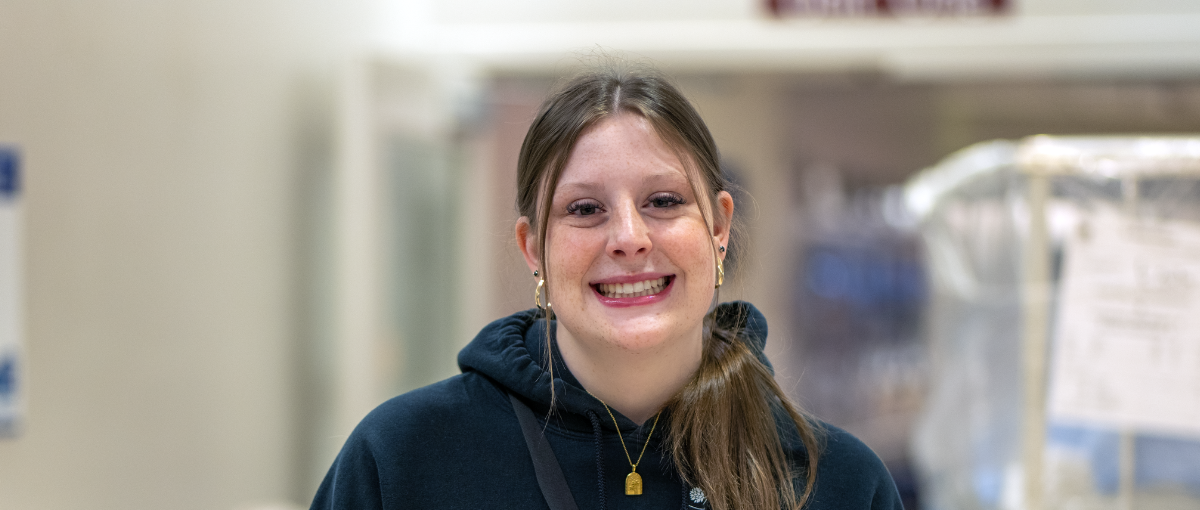
Chloe Smith was on Unit 3 at St. Mary’s Hospital in Camrose this summer when she met a patient going through psychosis, a woman who was pursuing a PhD.
“This is so wild,” Chloe remembers thinking. “The way that the brain works, it’s just crazy.”
It was a small moment on a shift full of them. Chloe, a summer student taking open studies at Red Deer Polytechnic on her way to nursing, spends her days moving between units, watching, restocking and helping wherever she is needed.
Chloe is one of 20 students at Covenant Health hired this summer through Canada Summer Jobs; a federal program that the organization hadn’t secured funding for in recent years.
“In the past few years, we have submitted applications, and despite MP approval, did not receive funding,” says Jayna Welch, talent acquisition advisor at Covenant Health. “This year, we were fortunate to receive funding from the committee that approves the allocation of funds.”
How the funding works
Canada Summer Jobs helps employers hire people age 15 to 30 for the summer. Covenant Health applies on behalf of leaders across the organization, laying out what students will do, how their skills will be developed and who will mentor them. From there, an application goes to the local Member of Parliament’s office to check whether it fits the riding’s priorities. If it clears that step, it goes to a national committee, which decides where the money goes.
“There are certain priorities that the government has to focus on,” Jayna says. “Areas that they know are of concern or harder to fill, or they’ve got future pipeline considerations.”
Each Canada Summer Jobs position comes with $2,100 in federal funding, covering $7.50 an hour for 35 hours a week, over eight weeks. Across the 23 positions, that is close to $48,300. Jayna’s team ended up filling 20 of the 23 positions this year.
Camrose sits in Battle River-Crowfoot, the riding held by Pierre Poilievre, whose main constituency office is in the city. Jayna says the riding’s stated priorities this year were projects in rural areas, community events, community-based and not-for-profit organizations and initiatives supporting children or youth, all of which the St. Mary’s positions fit. Counting nearby Castor, the riding carries more of the 23 positions than any other.
Six other MPs supported positions elsewhere in the province this year: Michael Cooper in St. Albert-Sturgeon River, Rachael Thomas in Lethbridge, Jagsharan Singh Mahal in Edmonton South East, Kelly McCauley in Edmonton West, Amanpreet S. Gill in Calgary Skyview and Shannon Stubbs in Lakeland.
From shy to confident
At St. Mary’s, the students land wherever the day takes them. Leona Bobik, unit manager for rehab, day surgery, endoscopy, the pre-admission clinic and respiratory at St. Mary’s, oversees the hiring and helps direct their days when their assigned managers are not around.
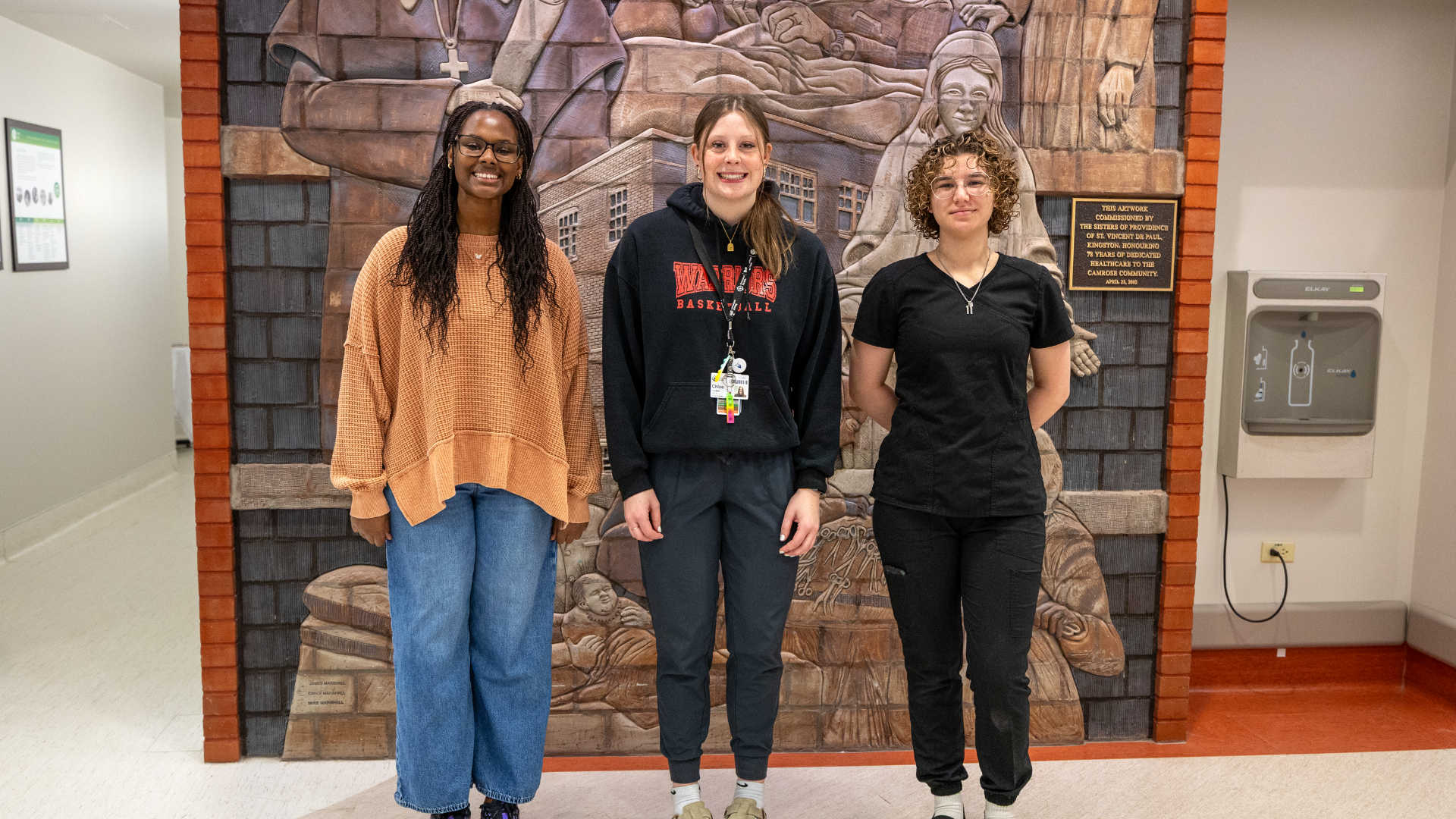
Their days start with cleaning high-touch surfaces and watering the courtyard gardens, then branch out from there: wheelchair transport, rec therapy sessions, updating disaster manuals, shadowing nurses and other tasks as needed. Every afternoon, the students meet up to do comfort rounds together, pushing a cart to every admitted unit to check who needs a coffee, a blanket or fluffed pillows.
“Many of the students come in really, really shy at the start of the summer,” Leona says. “They’re unsure of how to communicate with patients that are going through a difficult time.”
That changes fast. Leona has watched students go from not knowing what to say to a patient, to sitting down with them for an hour to play crib or take them out to the patio.
“Now they’re not scared and it’s amazing to see their confidence grow,” she says. “If there’s a physician request to go see the one patient that’s waiting placement, that doesn’t have a lot of family, that’s part of their daily work now.”
For Chloe, the summer has done more than teach her to talk to patients. It has nudged her career plans toward psychiatric nursing.
“It’s given me a lot of options, and I’ve seen what I like and what I don’t like,” she says. “I have gained a lot of experience, which has been valuable.”
A pipeline for the future
Jayna says that shift is exactly what the program is built for. Students who might only know health care from social media or television get to see the real thing before they commit to years of schooling, and the ones who do commit often come back.
“For our nursing students, they’re working over the summer as an undergraduate nurse, and then once they’re done, they can stay on when they’ve graduated and they already have relationships built at the facility,” Jayna says. “That makes for a stronger workforce with higher retention rates.”
For a hospital in a region where some postings sit open for months, that head start matters. Leona says giving young adults this kind of easy, hands-on exposure to rural health care is doing two things: helping students figure out what they actually want to do and quietly solving a recruitment problem years before it shows up on a staffing sheet.
“It’s such a rewarding program for us as leaders,” Leona says. “To see the impact that it has on them. And in the community, word spreads that the hospital isn’t such a scary place.”