
Diverse mannequins used in basic life support training for the first time in Alberta
March 5, 2026
By Marguerite Watson, senior advisor, content lead
In her five years of nursing, Payden, a licensed practical nurse in the emergency department at the Misericordia Community Hospital, had practiced cardiopulmonary resuscitation (CPR) with the mannequins that most people encounter in CPR classes — flat-chested, white and representative of the male sex. Until recently, she’d never practiced with mannequins who have breasts or are diverse in skin tone.
“It’s nice to see different mannequins,” says Payden. “I like that the (CPR) training is more diverse now. The mannequins are not just white males.”
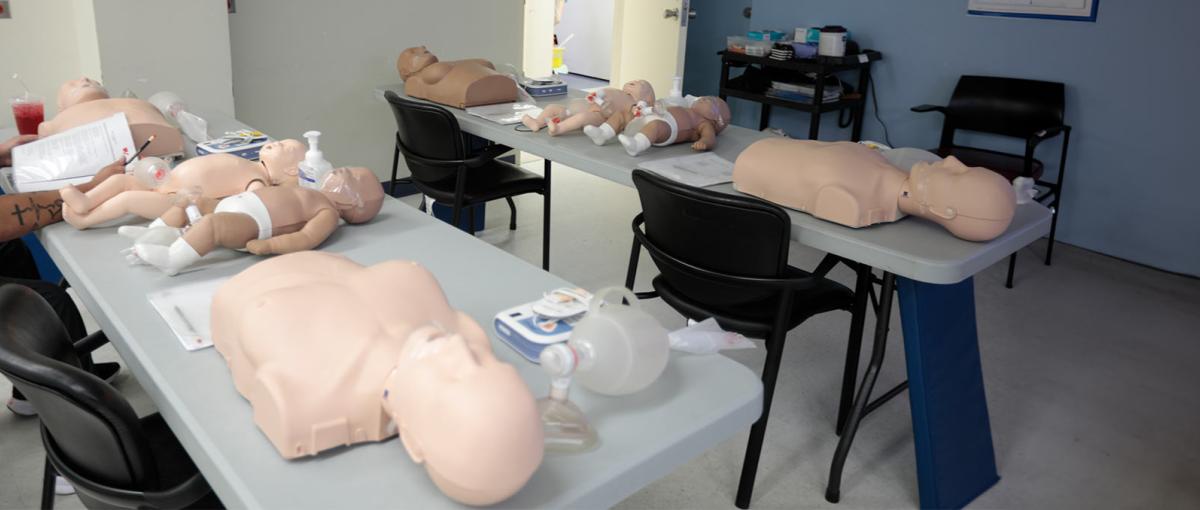
Payden is one of more than 950 staff from the Misericordia and Grey Nuns community hospitals who have completed CPR training with new sets of mannequins purchased for Covenant Health’s basic life support program. The first of their kind to be used in Alberta, some of the new adult mannequins have breasts and some of the adult and infant mannequins have different skin tones. The basic life support program purchased the mannequins with the goal of making training more representative and inclusive of patients and of ultimately improving care and outcomes for people who experience cardiac arrest.
The mannequins were purchased in response to research indicating that women are less likely than men to receive CPR if they have a cardiac arrest when in the community, partly because of bystanders’ hesitation to remove their clothing. The situation is more pressing for women of colour, who are the least likely of anyone to receive CPR from bystanders.
Researchers suggest that lack of access to training with diverse mannequins may also be a factor behind hesitation to provide CPR. About 95 per cent of the mannequins used for basic life support training globally do not have breasts and are flat-chested, and only 12 per cent of mannequins used in North America are representative of people of colour.
Charlotte Oostveen, simulation lead for Covenant Health, says training for healthcare workers needs to represent all patients they serve.
"Equitable care starts with equitable training. Simulation that reflects diverse bodies and patient experiences helps ensure providers are prepared to deliver safe, high-quality care to all patients."
Given that goal, the basic life support program launched training sessions with the new mannequins in June 2025, running three classes per week with an average of 10-12 staff per class. Carol Price, corporate manager for professional practice and clinical learning, including the basic life support program, hopes that training with diverse mannequins will help Covenant Health staff improve their skills and respond more confidently to a broader range of patients.
“Most cardiac arrests happen in diverse communities and so if we’re only training with mannequins that are white, male and lean, it doesn’t give a true reflection of real-world diversity. Using mannequins that are more realistic and include people of different races, genders and body types will help prepare (staff) for actual emergencies that we do see.”
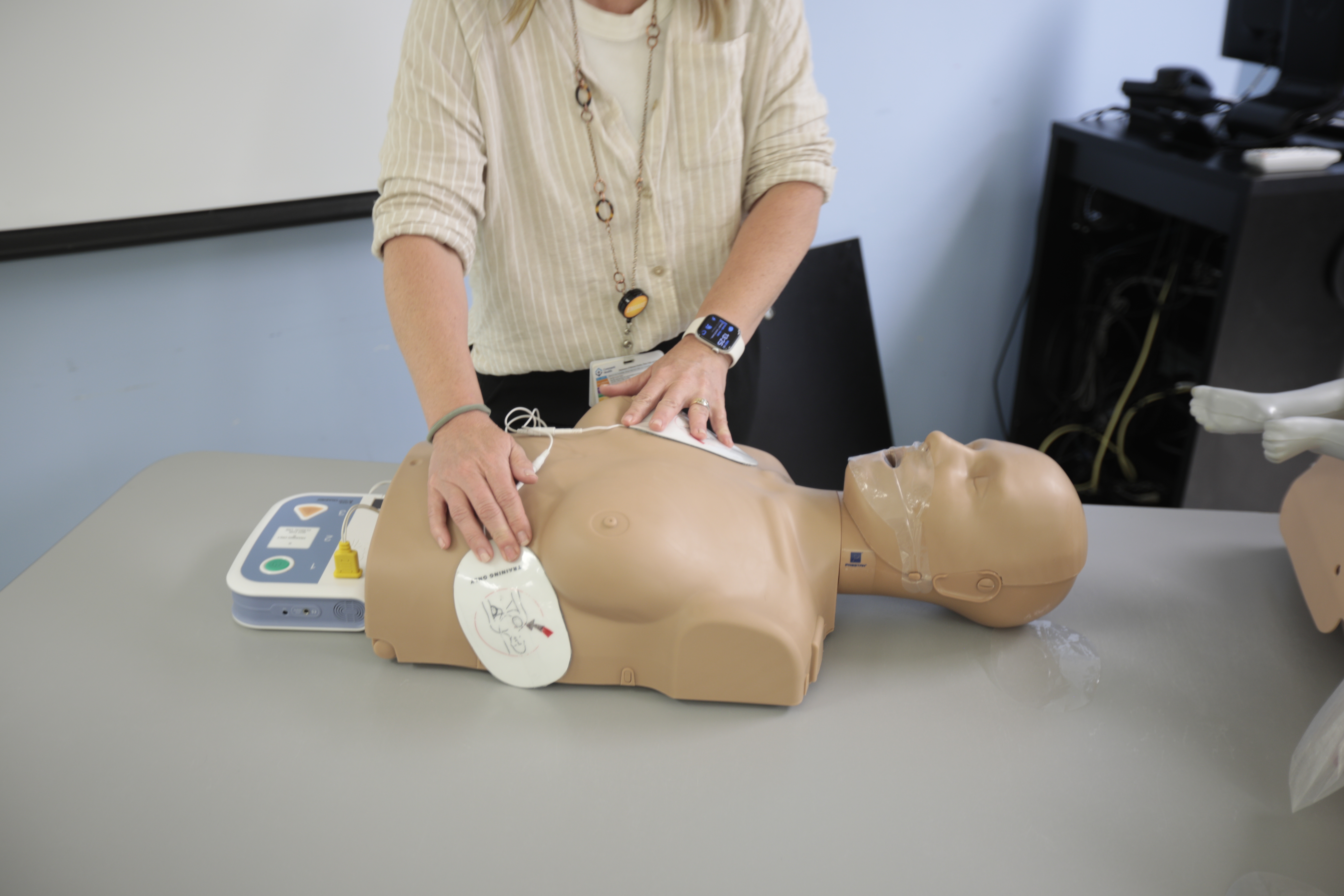
During the training, staff learn that hand positioning and compression techniques are the same for breasted and non-breasted people, but placement of the pads for the automated external defibrillator (AED) — the device that delivers an electric shock to someone in cardiac arrest — is different depending on the size of the breast tissue.
Carla Rans, basic life support facilitator, says that staff are sometimes surprised to learn that they need to consider breast tissue with the placement of the AED pads. The breast tissue on large-breasted people, for example, must be moved out of the way so the pads can be placed at the left side of the rib cage or underneath the breast.
“I think some (staff) have just never thought about it,” Carla says. “We’ve never had to address this in class because we’ve never had a mannequin to use to talk about it. It’s just a matter of bringing that heightened awareness so they now feel more comfortable with it.”
For Payden, it is helpful to know that, except for the placement of the AED pads, there is little difference in doing CPR on different anatomies. “It just increases people’s confidence knowing that there’s not much difference,” she says. “You do basically the same things.”
To assess the training as a quality improvement initiative — the impact on staff confidence and how this might improve health outcomes — as well as response to the diversity in skin tones and genders, the basic life support program partnered with researchers from the Faculty of Nursing at the University of Alberta. Between July and October 2025, they collected data from pre- and post-training surveys completed by almost 600 staff.
The surveys asked respondents whether they had ever hesitated to provide CPR due to uncertainty about body differences, if they believed different techniques were required for different body types, how confident they were in performing CPR on different body types, how they felt about seeing diverse representation in the mannequins and other questions.
“There was quite a bit of consistency in the responses,” says Nicole Tegg, a registered nurse and PhD candidate who co-ordinated the research.
For example, the level of confidence in performing CPR on different body types was consistent based on practice years, Nicole says. In the pre-training survey, the more junior staff were typically the least likely to report full confidence in performing CPR, while senior staff — those with 20 or more years of healthcare experience — reported feeling the most confident.
Staff reported feeling more confident following the training, says Nicole. “The response for improved confidence (in the post-training survey) was quite high — almost 84 per cent of the junior staff.”
In the post-training survey, junior staff were also more likely to respond positively to the diversity of skin tone and gender represented by the mannequins, says Nicole. “One of the staff said, 'It’s beautiful to see diverse mannequins. It opens minds to the same scenario with different individuals that represent the variety in our population.’”
Looking ahead, Carol and the basic life support program are hoping to purchase even more diverse mannequins — those with a larger body mass index — for staff training. They are also seeking funding to equip all Covenant Health sites, in addition to the Grey Nuns and Misericordia hospitals, with diverse mannequins.
“It’s not just about representation, but about realism, equity and effectiveness in the training,” says Carol.
For staff like Payden, using the new equipment in CPR training has positive benefits.
“It’s a good step towards inclusiveness, and it will help make future staff more comfortable doing CPR on different people,” she says. “When I first started nursing, it would have been nice to see the different mannequins. I would have known that there’s not really much of a difference in techniques.”