

Meet Amber Ruben: Learning, teaching and advancing reconciliation
How a career in pharmacy led Amber to help advance Indigenous health equity and culturally safe care across Covenant
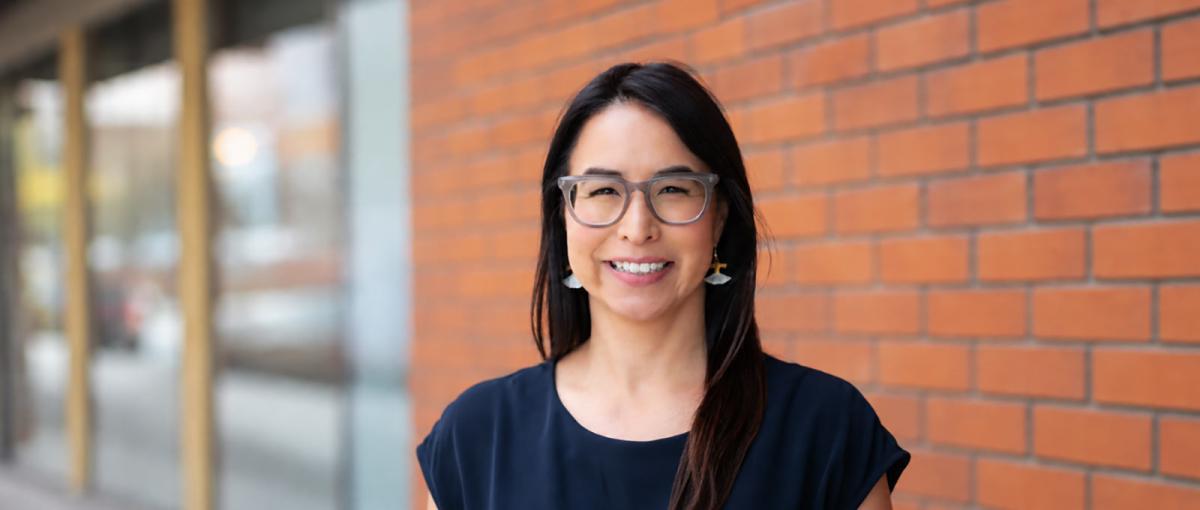
September 28, 2026
By Andrea Carter, Communications Advisor
For nearly 20 years, caring for patients has been at the heart of Amber Ruben’s work at Covenant.
Much of her career has been spent as a clinical pharmacist at the Misericordia Community Hospital. While her work has taken a new direction, pharmacy remains an important part of her identity, and she continues to return to the Misericordia for occasional shifts.
“I have a sense that I’m always going to identify as being a clinical pharmacist as well,” says Amber. “It’s just been part of my identity for 20 years.”
Today, Amber is Covenant’s Indigenous health equity and reconciliation Consultant, supporting work to advance reconciliation and culturally reflective care across the organization.
About a decade ago, an opportunity to teach pharmacy students about Indigenous health set Amber’s career on a new path.
As she prepared for the lectures and built her own knowledge, Amber became increasingly aware of gaps in health care from an Indigenous perspective. That realization eventually led her to graduate studies, including learning about Indigenous methodologies and community-based research.
“I’d say that really started my journey of transition,” she says.
A few years later, Amber had an opportunity to take that learning further at Covenant through a current-state and needs assessment focused on Truth and Reconciliation.
The assessment looked at Covenant’s work related to the health-focused Calls to Action and where gaps remained. It also led to a recognition that more external Indigenous voices were needed to help inform the work.
That work grew into Amber’s current role and a broader focus on advancing reconciliation across Covenant.
While the scale of her work has changed, the focus on patients and families has remained. Instead of working one-on-one at the point-of-care, Amber now has opportunities to support change at an organizational level.
Amber says cultural safety goes beyond what a healthcare provider knows about another person’s culture. It requires an understanding of how colonization and experiences within the health-care system can shape a person’s experience of care. Importantly, whether care feels culturally safe is determined by the patient and family receiving it.
In practice, it can mean respecting how a patient understands health and wellness or creating space for traditional medicines and ceremony. It also means asking respectful questions to understand what each patient needs rather than making assumptions.
"It’s about meeting the patient where they’re at and trying to do so while respecting their culture."
Indigenous health equity and reconciliation Consultant
Amber says meaningful progress also requires looking at the structures that shape care. That includes considering how policies support Indigenous patients and families and ensuring staff have the learning and support they need to provide culturally safe care.
Amber also points to the importance of allies who are willing to take action and help advance this work alongside Indigenous voices. For her, allyship is an important part of putting reconciliation into action and supporting work that cannot be carried by Indigenous voices alone.
As the National Day for Truth and Reconciliation approaches on Sept. 30, Amber reflects on the progress she has seen and the work still ahead.
During her 20 years at Covenant, she has seen greater understanding of Indigenous history and the importance of traditional medicines. Today, she hears point-of-care staff asking whether a patient would like to smudge and help make that possible.
“That gives me hope when I see change at the point-of-care level,” she says.
And when that hope is harder to find, Amber thinks about an Elder she relies on and the words he shared with her about his work with First Nation students.
“He looked at me and he said, ‘I have hope,’” she recalls. “It made me realize that if there are Indigenous Peoples who have lived these journeys through systems set out to oppress them and they still have hope, I am in no position to give up my sense of hope.”