
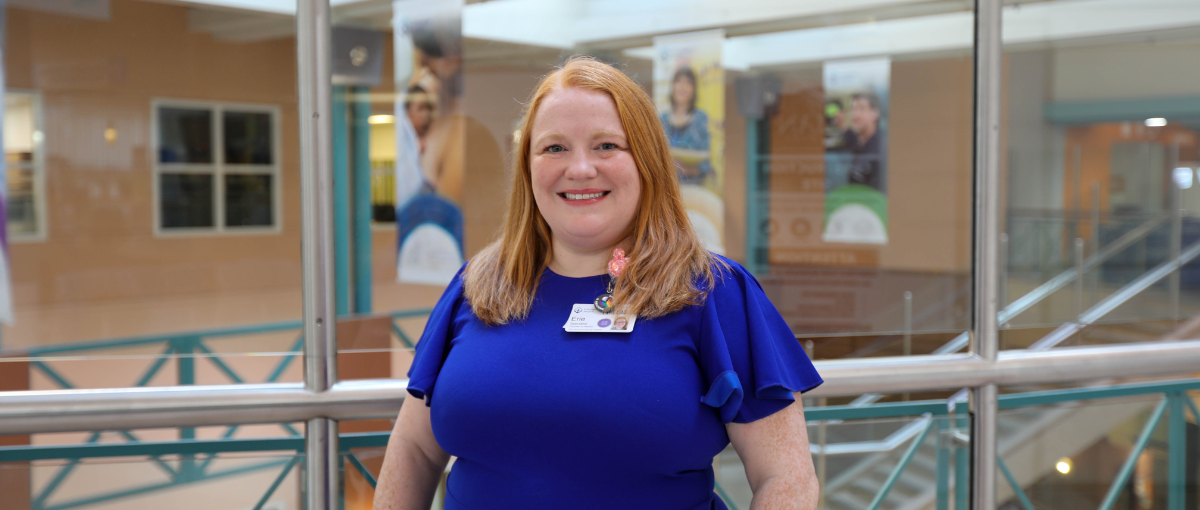
Meet Erie Melnychuk, lactation and infant feeding specialist, Misericordia and Grey Nuns Community Hospitals
August 5, 2026
By Peter Rybar, social media and storytelling advisor
Erie Melnychuk recently ran into a mother she had not seen in years. The last time they were together, the woman’s baby had been born very prematurely and was in a neonatal intensive care unit (NICU). Erie had helped her start supplying her own milk and later helped the baby latch at the breast. The mother had an update she was proud of. She had kept breastfeeding past two years.
“It wasn’t my job alone. It was the team of nurses, nurse practitioners, doctors, respiratory therapists and speech language therapists she had worked with in the NICU, not to mention her own drive and determination,” says Erie. “But I am so incredibly honoured to be part of a story like hers.”
Today, Erie is the lactation and infant feeding specialist at the Misericordia Community Hospital and the Grey Nuns Community Hospital in Edmonton. She spends two days a week at the Misericordia and three at the Grey Nuns, teaching nurses at the bedside and helping both sites hold their Baby-Friendly Initiative (BFI) designation. Most of the work happens where families never see it.
“I work behind the scenes to support, educate and train our staff so they can better support our patients and families when it comes to feeding their infants, specifically breastfeeding,” she says. “I consider myself an extra resource for nurses to access as they work with families every day.”
Her mornings start with a check-in with the charge nurses on the labour and delivery and postpartum units, to let them know she is available for bedside teaching. After that, the day can go anywhere. She might be in a patient room walking a nurse through a difficult latch, in a meeting about bringing donor human milk to the Grey Nuns or running an in-service for staff.
Every two weeks she teaches prenatal breastfeeding classes at each hospital. About 150 families have come through those classes across the two sites so far.
“I especially enjoy getting to work with families in such a low-stress environment,” she says. “The baby hasn’t arrived yet, they are just getting themselves prepared and I get to be part of that.”
Where it started
Erie’s interest in infant feeding goes back to her childhood. Her mom and her aunt both supported breastfeeding families through La Leche League, a peer support organization, so conversations about feeding and supporting new parents were ordinary household talk.
She started her nursing career more than 20 years ago in neonatal intensive care, working with families and their babies at a very vulnerable time. That led her to become an International board-certified lactation consultant (IBCLC) 16 years ago.

“What has always driven me is the belief that families shouldn’t have to make feeding decisions based on what support is or isn’t available,” Erie says. “Families need to make their own decisions about how they feed and care for their babies, and my role is simply to make sure they have the information, guidance and support they need to make the choice that’s right for them.”
What parents worry about
The fear Erie hears most is that a parent will not make enough milk. She says it is a valid worry.
“We spend nine months trusting our bodies to grow this baby. It can be scary to then have to trust our bodies to continue feeding the baby after,” she says.
Close behind is the belief that there is no milk at all in the first days after birth. The measure is simply different at the start, Erie says. For the first day or two, that early milk, called colostrum, is counted in drops rather than millilitres, and a very small amount goes a long way.
“But it’s hard when there’s no gauge on the breast to see how much is in there,” she says.
Some of the worry comes from waiting for a baby who has not arrived yet, and Erie has a line for it that gets a laugh in class.
“I joke in my prenatal classes that breastfeeding is one of the worst group projects they’ll take on. They’ve spent so much time planning and learning, and they’re still waiting for their other group member to show up,” she says.
Training for nurses
Nurses who work in women’s and children’s health at the Grey Nuns and Misericordia hospitals get extra lactation education as part of their unit orientation, including a dedicated lactation course and an eight-hour classroom day with Erie. From there they keep building through annual lactation education and regular in-services. What sets the program apart, she says, is that she goes with them.
“No matter a nurse’s experience level, I’m available to work alongside them when they encounter a breastfeeding challenge,” she says. “I can join them at the bedside, help them assess what’s happening, help educate both the family and the nurse in real time and provide guidance on when more specialized support may be needed.”
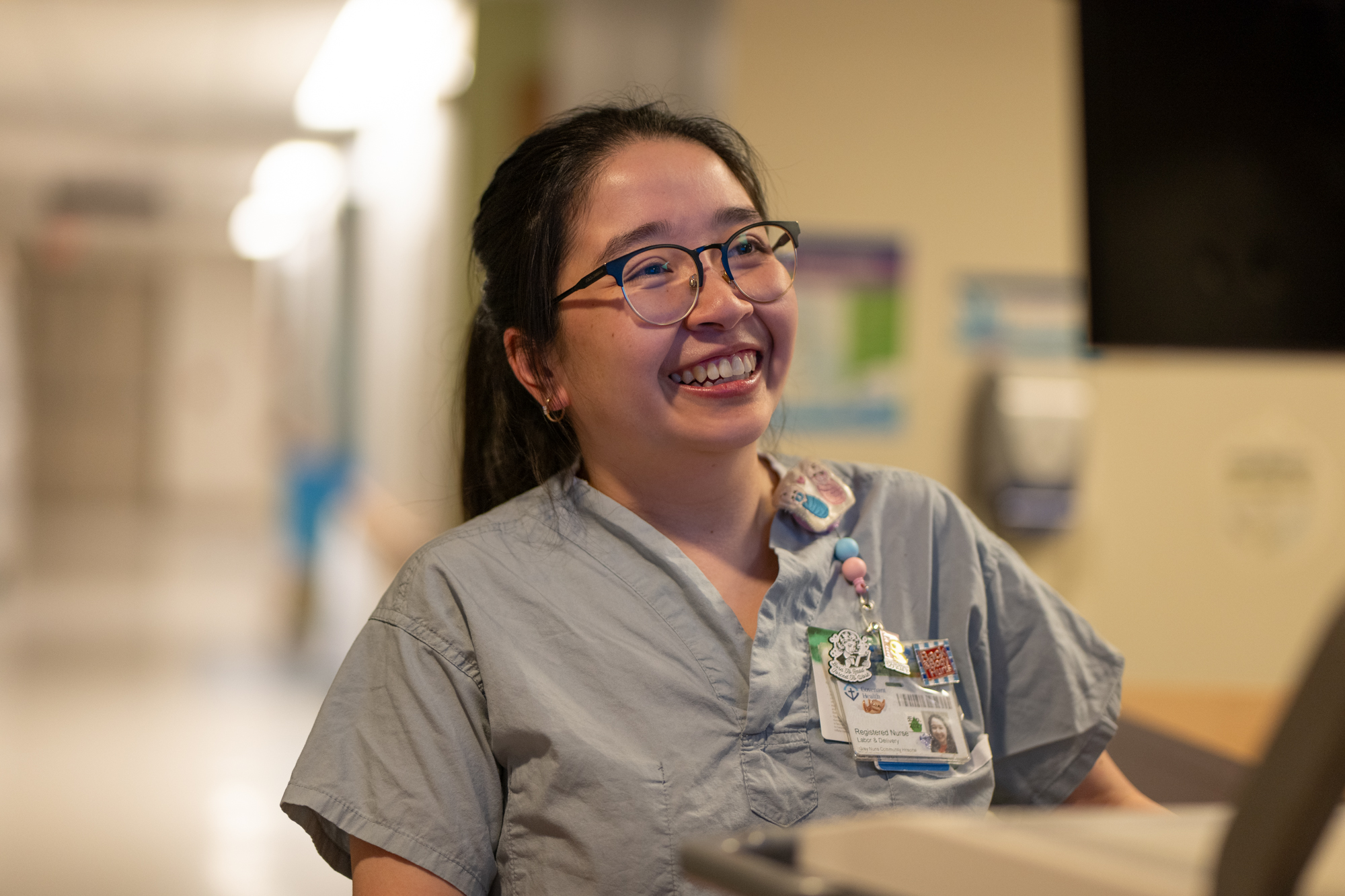
Most families decide how they want to feed their baby in the first trimester, which changes the job by the time they arrive on the unit, Erie says. She describes the nurses’ role as “mythbusters.” The work is to clear up misconceptions and make sure families leave the hospital confident about feeding at home, whatever method they have chosen.
Lactation consultants are a specialist resource, most valuable when feeding problems are complex, high risk, persistent or urgent.
“Lactation support is everyone’s responsibility, not just the lactation consultant’s responsibility,” says Erie. “Not every breastfeeding challenge requires a lactation consultant, but every family deserves skilled feeding support and that’s what our nursing staff provide every day.”
Donor milk on the unit
Since January 2026, 48 families have used donor human milk on the postpartum unit at the Grey Nuns, the one site where families can buy it right on the unit, up to 10 bottles without a prescription. It is used at the Misericordia as well, but families there buy it from a pharmacy about a seven-minute drive from the hospital. Two Edmonton pharmacies sell it without a prescription. Larger orders need a prescription and go through the Northern Star Milk Bank. For babies admitted to the NICU, donor human milk is free.
What she is proudest of
Erie once gave a two-hour talk on breastfeeding and BFI to a group of nursing students rotating through the units. Three days later, she ran into one of them in a hallway. The student had helped a family breastfeed using what she had learned that day. She had never supported a breastfeeding family before.
“I joke that 98 per cent of my job really is to be a cheerleader, and so to be able to encourage staff in their own skills and watch them gain confidence and feel supported to help families really excites me,” she says.
When asked what she is proudest of across the two sites, it’s the staff around her that come to mind.
“I love how passionate our teams are about their jobs, how seriously they take their roles in upholding our BFI standards and how much they care about making sure every family is supported in their feeding goals,” says Erie.
“I love the days when I come into a room and can tell the nurse and the family that they’re all doing an amazing job and the baby is doing exactly what they need to be doing right now. And then, for some reason, they thank me for it.”