
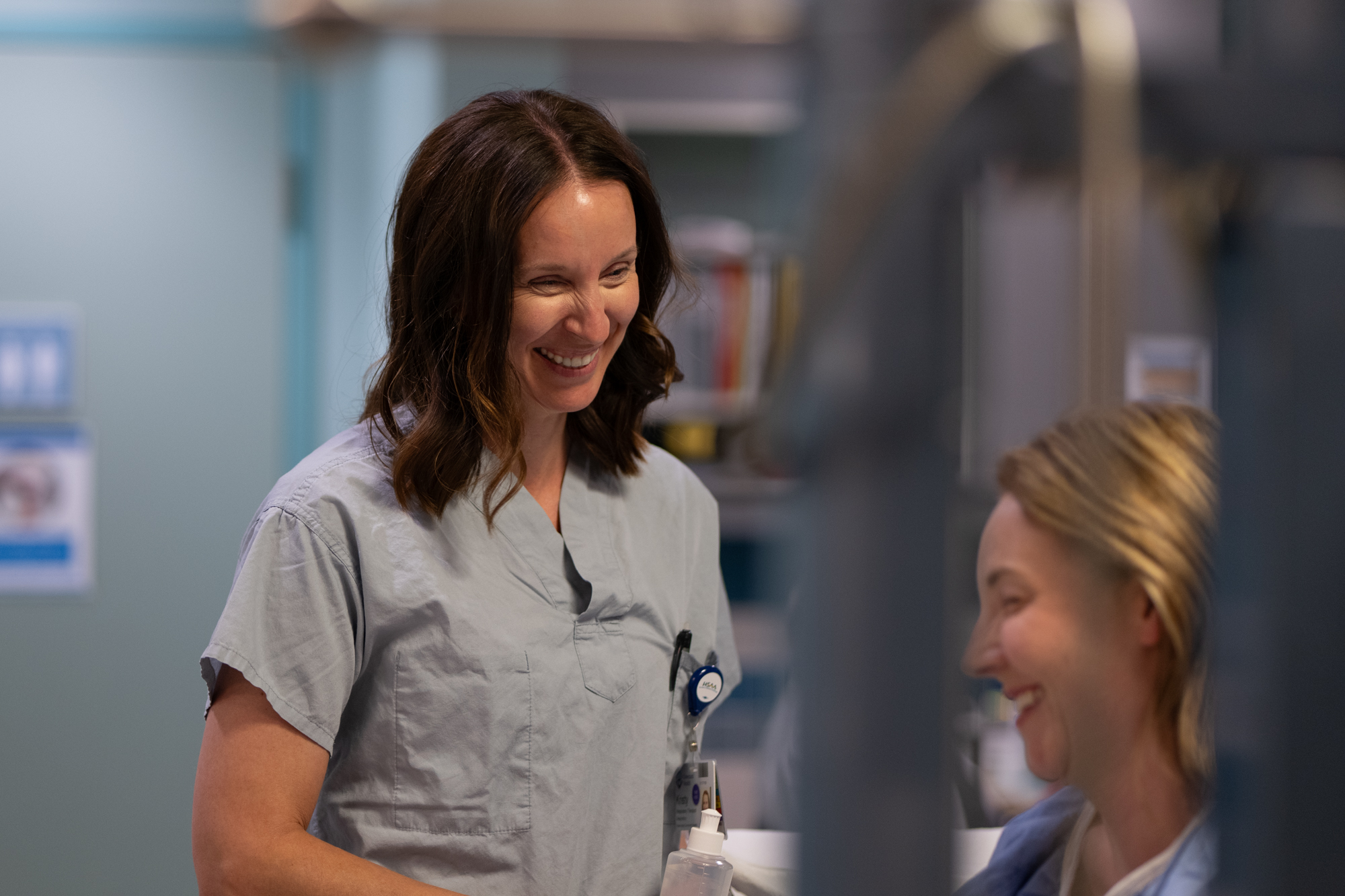
Meet Kristy Barry, clinical respiratory educator, Misericordia Community Hospital
October 23, 2026
By Peter Rybar, social media and storytelling advisor
The patient hadn’t been outside in months. Living with a neuromuscular condition, they relied on non-invasive ventilation to ease their work of breathing while they waited in hospital for long-term care.
One of Kristy Barry’s colleagues on the respiratory therapy team worked with the care team to plan a trip outdoors. Kristy was working that day and went along as an extra set of hands.
“Seeing that our patient felt safe enough with us to leave the walls of the hospital, and how they lit up with the sunshine on their face and cool summer breeze, was something I will never forget,” Kristy says.
Today, Kristy is a clinical respiratory educator at the Misericordia Community Hospital in Edmonton, part of a team that covers the entire hospital.
“We are like a specialized nurse for the heart and lungs,” she says of her job. “An RT is often there from the first breath to the last.”
Kristy always had an interest in the medical field. She didn’t want the responsibility of being a doctor and wasn’t sure nursing was for her. A career investigation turned up respiratory therapy.
“Like most people, I had no idea what a respiratory therapist was or did,” she says.
A job shadow helped her decide. After a year of general sciences at Grant MacEwan, which didn’t give her the clear direction she wanted, she earned her RT diploma at the Northern Alberta Institute of Technology (NAIT). She was working at the Misericordia just before she turned 21.
“I decided to apply and did not regret it,” she says. “Being an RT has been a very rewarding career. I have been uplifted, challenged and truly feel like I have made a difference.”
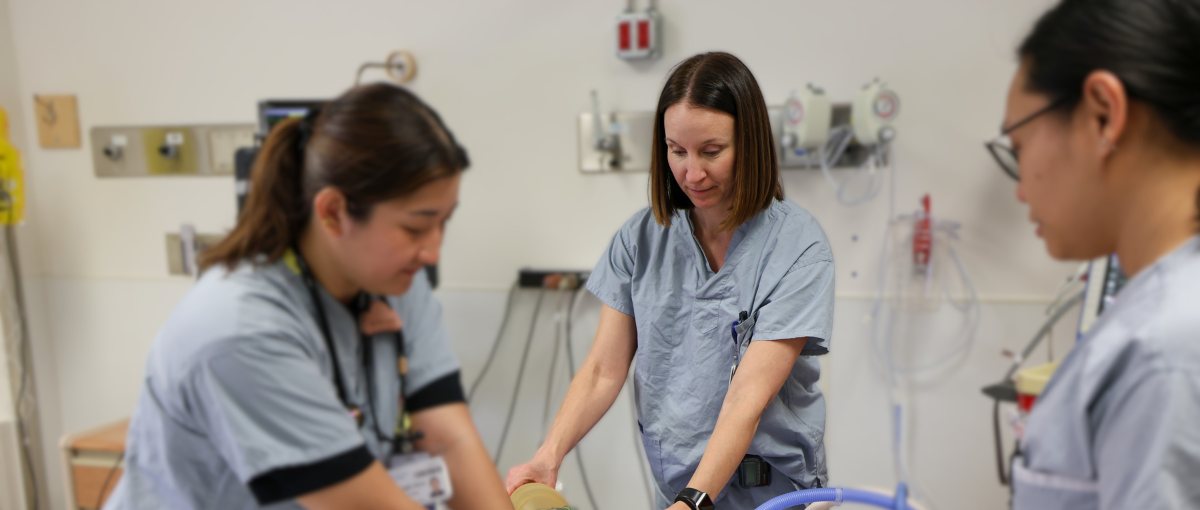
What surprises people most, Kristy says, is how many places an RT works. At the Misericordia, acute care RTs rotate through the emergency department, adult critical care, the neonatal intensive care unit, medicine, surgery, outpatient units, hyperbaric oxygen and pulmonary function. They are also part of the Code Blue, rapid response and medical emergency teams.
RTs are usually assigned to one area but often end up helping in another, depending on workload and how sick patients are.
“From the delivery room for a caesarean section to a palliative patient on the medicine unit, no shift is ever the same,” she says.
Covering the whole hospital means the team has to sort and prioritize every call and page. Shifts with back-to-back emergencies are “extremely demanding and stressful,” Kristy says.
“Our team is amazing and supports each other through the difficult times,” she says.
After a tough shift, fresh air and exercise help her clear her mind. “But sometimes the energy is lacking and a hot tub might be the best way to decompress.”
Helping a critically ill patient in intensive care breathe on their own again, without a ventilator, takes a careful plan and the whole care team.
“The RT has a huge role, but it involves the physician, nursing, rehab, dietitian, pharmacy,” she says. “Everyone plays a part.”
During the pandemic, when RTs were being pulled in every direction, the rehab group reached out to the RT manager to offer help. Physiotherapists stepped in, working to their full scope.
“It was so inspiring to see the physiotherapists ... learn our role and take on some of the RT workload so patient care would not be compromised,” she says.
She’s always had support for the education she wanted, including every leadership course available and many conferences. As an educator, she now works to create the same chances for the rest of the RT team.
“My mentors and coworkers have taught me so much throughout my career. My patients and families have also taught me the most important things: being a patient advocate and helping to promote safe, quality care,” she says.
What she didn’t expect when she started was how valued she would feel and how close she would become with her colleagues.
“Working in a smaller hospital, you see familiar friendly faces everywhere,” she says. “You get to know everyone by name or know what unit or department they work in. Covenant is my home away from home.”
Asked what’s next, Kristy looks past her own job.
“I would love to see our profession grow,” she says. “For everyone to know what a respiratory therapist is and how we can contribute to the team and patient care.”
For students thinking about respiratory therapy, her advice is direct.
“You are part of the action and a very important member of the patient care team. If you are not breathing, you are not living.”