

Meet Makayla Mantla, undergraduate nursing employee, St. Joseph’s General Hospital, Vegreville
May 13, 2026
By Peter Rybar, social media and storytelling advisor
Makayla Mantla can still picture the small brown log house in Behchokǫ̀, Northwest Territories, where she spent her early years. There was no running water. Snow blew in through the door in winter. The roads were not paved. And growing up, she never once saw a successful Indigenous person.
“From a young girl growing up, I just believed that because I’m Indigenous, I wasn't smart, I wasn't beautiful and I couldn't get an education,” Makayla says. “I never dreamed I would get into nursing school.”
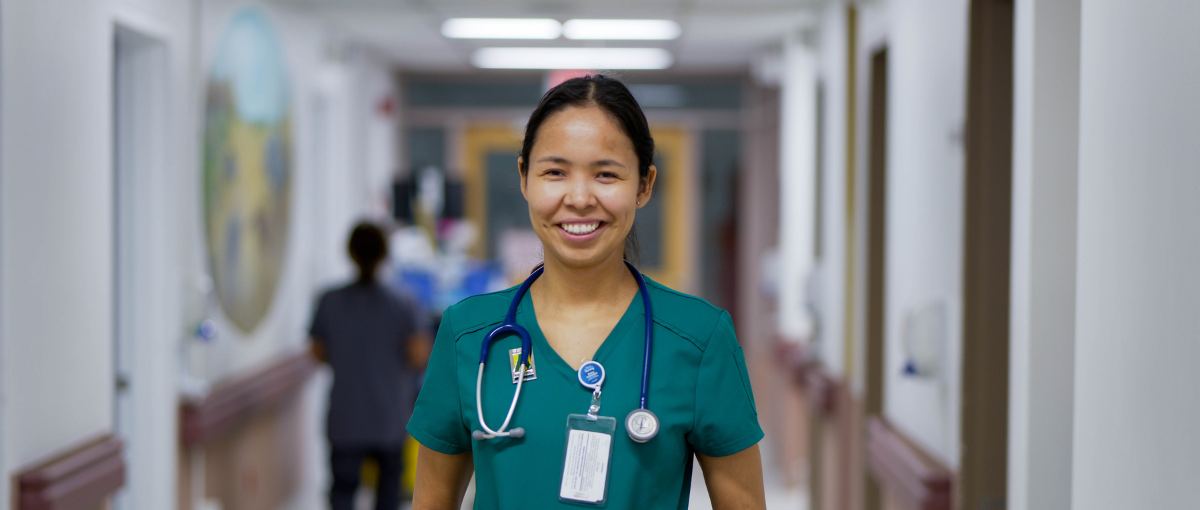
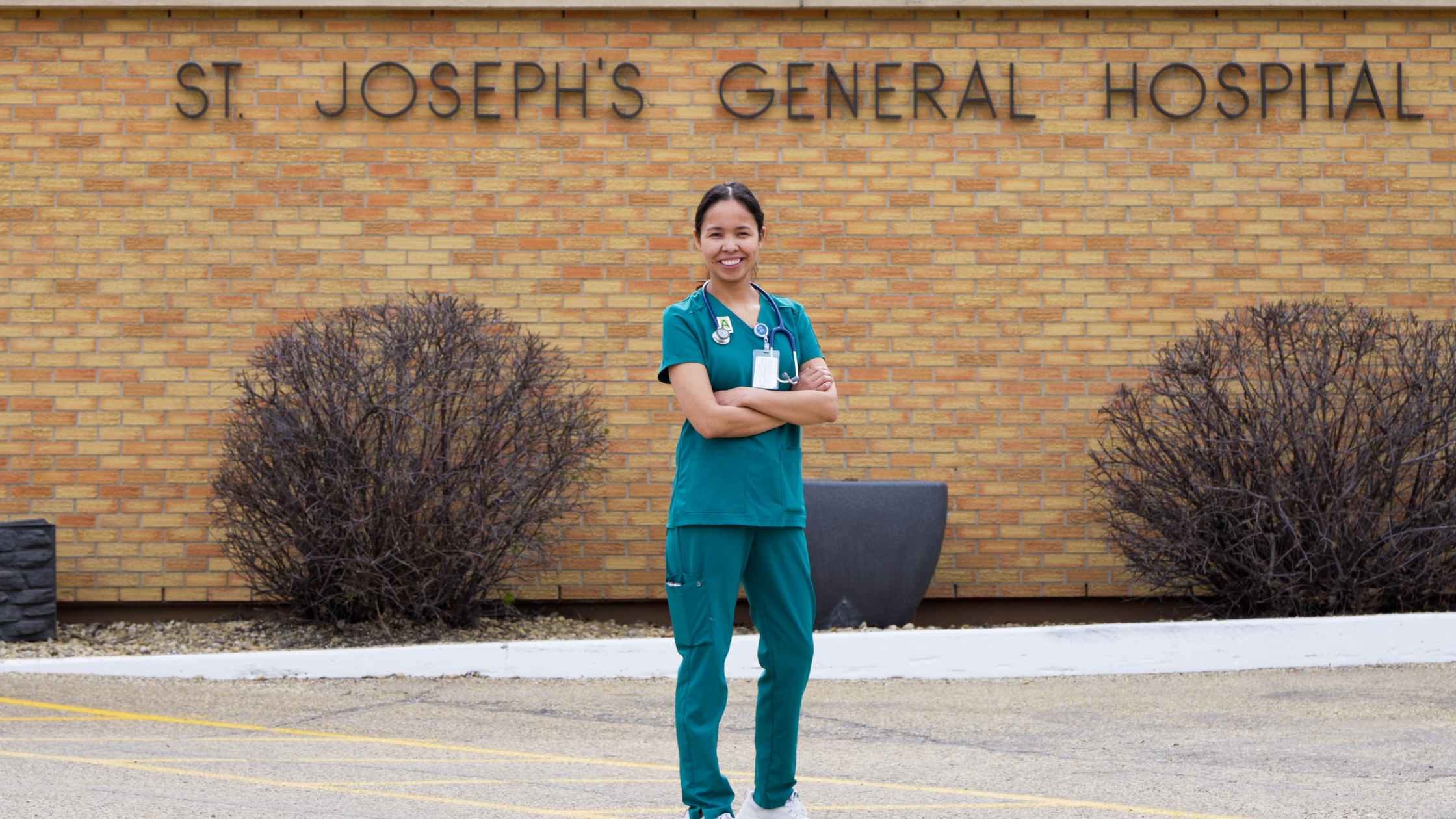
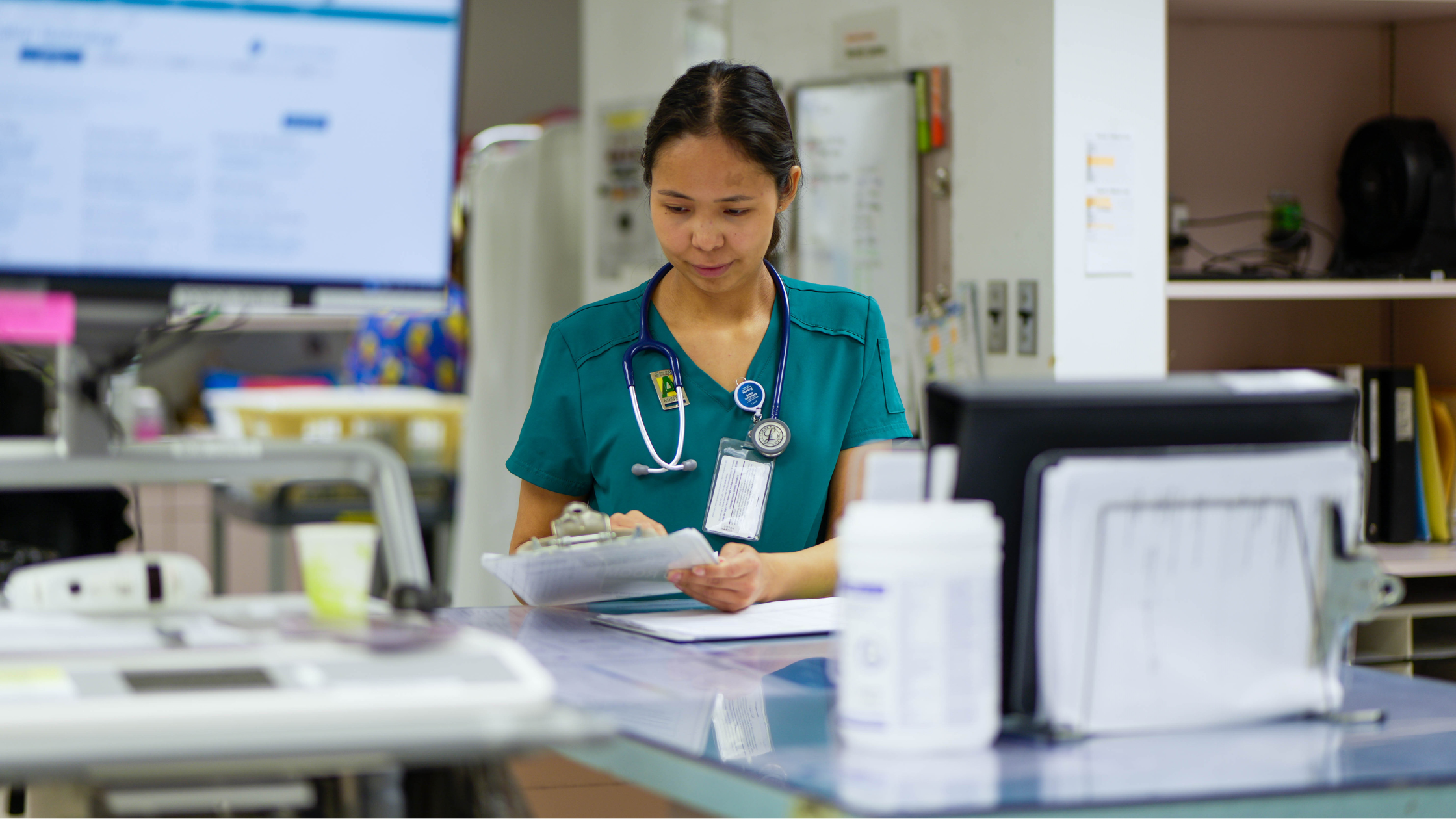
Today, Makayla is a First Nations, Treaty 11 Tlicho citizen, a recent University of Alberta nursing honours graduate and an undergraduate nursing employee (UNE) at St. Joseph’s General Hospital in Vegreville. After completing her preceptorship there, she accepted a casual position with the site, choosing to stay rural while she begins her career as a registered nurse.
Her path to that decision took seven and a half years. It also took surviving things she says she is still learning to talk about.
A long road to nursing school
Makayla’s family of seven moved from the Northwest Territories to Edmonton when she was young, hoping for more opportunity. What followed were years of food insecurity, housing insecurity and the kind of poverty that meant her whole paycheque from retail jobs went to groceries and bills for her younger siblings. There was a stretch when her family lost their apartment to mould and water damage and ended up sleeping in their SUV and driving to a rec centre early in the morning to use the bathroom and shower.
“I can’t believe we went through that,” she says. “We are an urban Indigenous family that still went through the systemic barriers many Indigenous people face in Canada.”
In January 2019, with just enough money saved, Makayla started classes at the Northern Alberta Institute of Technology, upgrading her high school courses so she could apply to university. That same year, she survived a life-threatening ectopic pregnancy. She remembers asking a nurse for pain medication and being treated with what she now understands was bias.
“Back then, I was so confused,” she says. “But now, with my nursing education and knowledge, I know why. She assumed I was drug seeking because I look Indigenous.”
Makayla decided that if she could survive that, she could survive nursing school. She entered the University of Alberta’s Transition Year Program, failed a first-year nursing class, retook it and kept going. Along the way, the faculty invited her into the honours program.
“I had to join the honours program because I have to show that Indigenous people can do nursing and that they can also do research to help more Indigenous communities,” she says.
Choosing rural
When the option came up to do her final preceptorship in a rural site, Makayla hesitated. One clinical instructor had told her rural placements were for the strongest students. Friends warned her that small towns could be harder for Indigenous people. She signed up anyway.
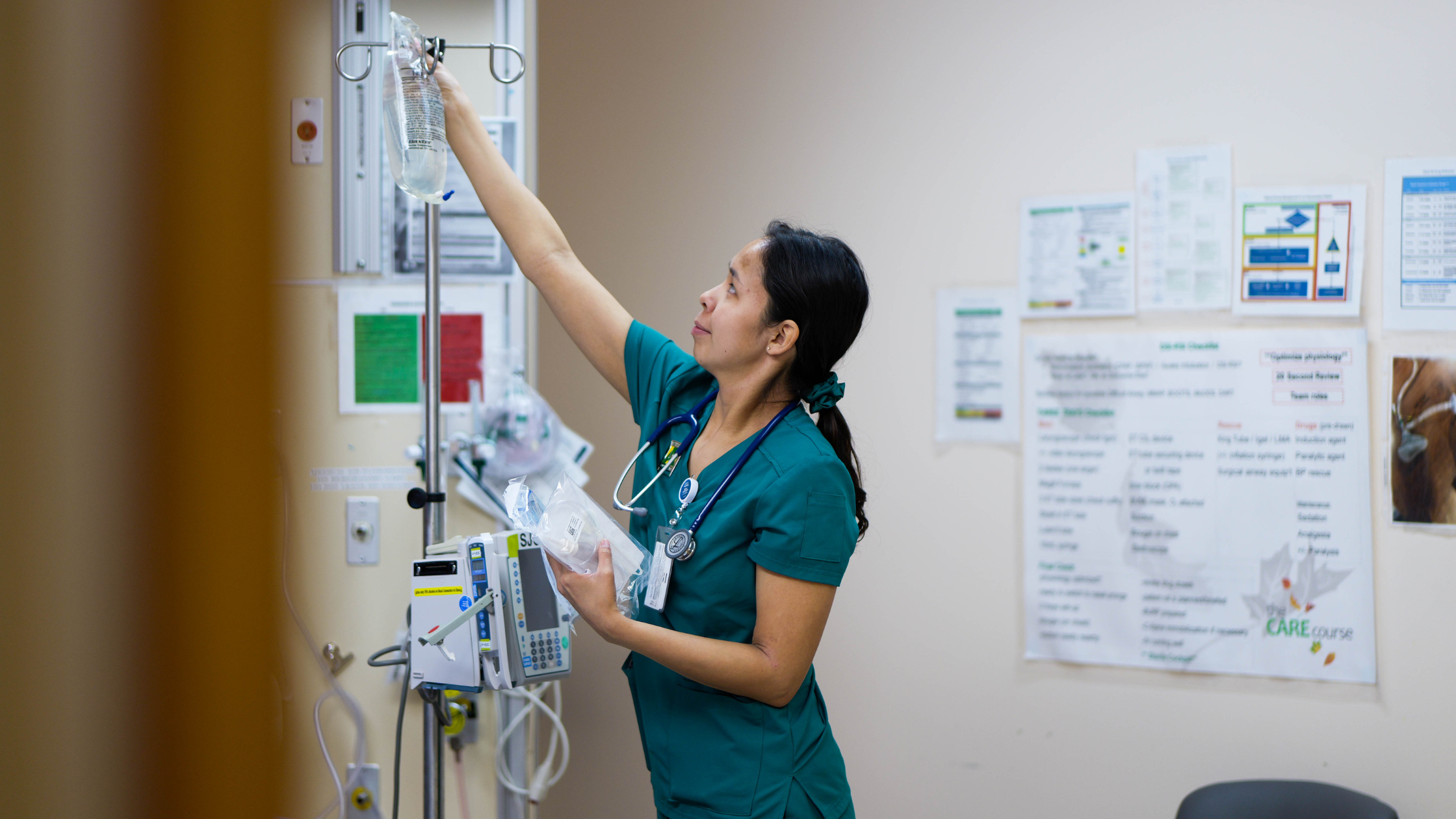
The UNE program at Covenant Health gave her the structure she needed. UNEs are student employees in their final year of nursing studies who have completed at least 600 hours of clinical practice. They work under the guidance of a registered nurse, performing skills covered in their curriculum and getting real exposure to a unit before graduation.
The program is also a key part of Covenant Health’s nursing workforce development strategy.
“The UNE program bridges the gap between classroom theory and clinical practice, and it gives students a chance to grow into the nurse they want to become," says Jayna Welch, talent acquisition advisor. "For Makayla, that meant finding a team that believed in her and a community where she could see herself thriving.”
Makayla’s first night shift at St. Joseph’s hospital was 11 p.m. to 7:15 a.m. She had never worked overnight before. She was nervous, but she survived it, and from there her training built gradually, first on the medicine unit and then in the emergency department.
Her preceptor and the team gave her room to ask questions. That mattered more than people might realize, she says.
“Back home, I had that mindset of shame and self-doubt. That carried into my education, where I thought, ‘I’m Indigenous. I’m not smart.’ There have been times in nursing where I've felt like I’m not at the level I've needed to be. In Vegreville, I have never felt embarrassed to ask questions or double-check things. I have felt very supported in a way I didn’t feel supported in the city.”
What rural nursing taught her
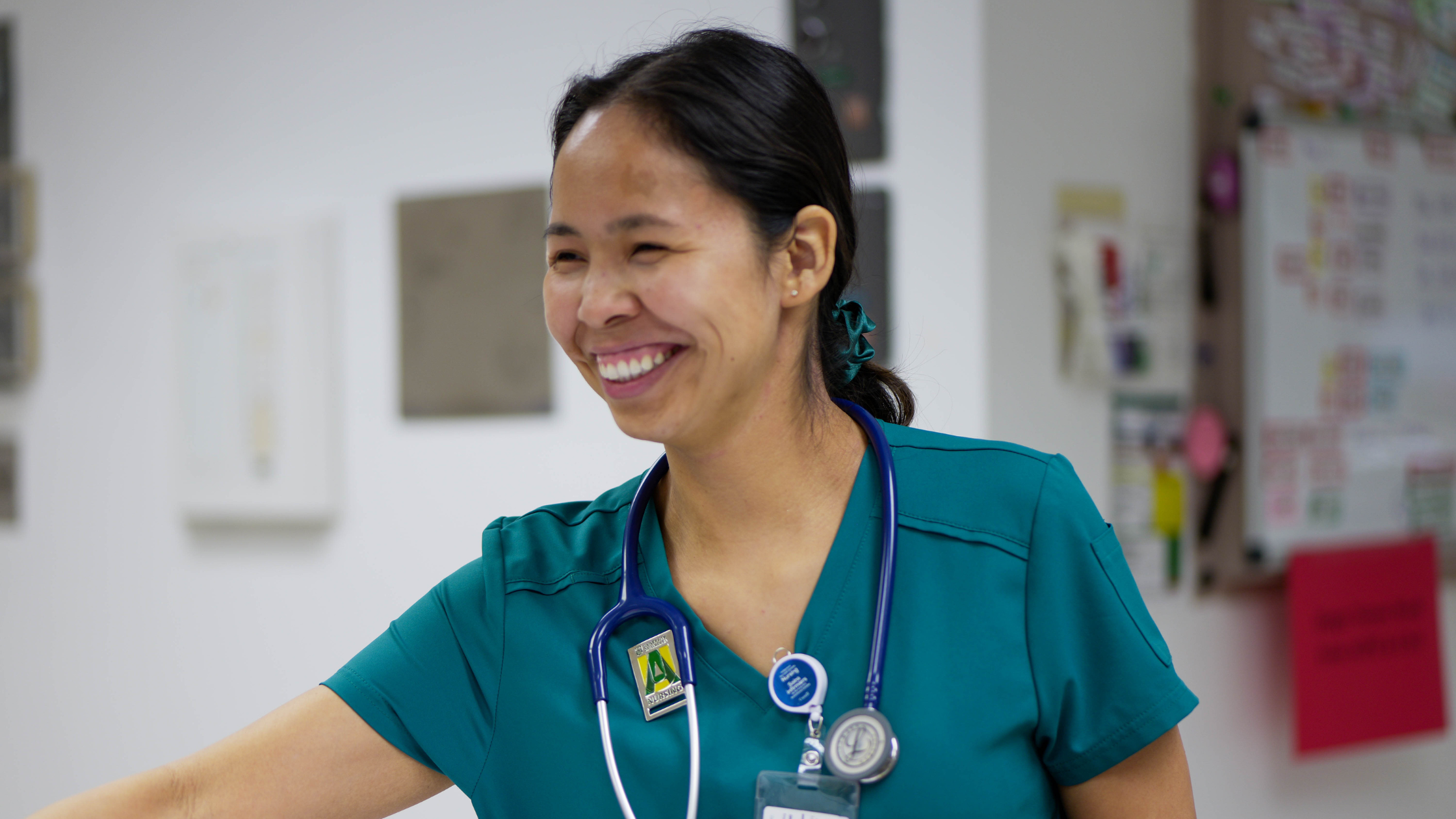
Rural nursing meant taking up to five patients at a time, working 12-hour shifts and putting in stretches of six-night shifts in a row. There were rough days. On one of her last shifts, the computers on the site’s second floor went down. The next day was harder still. She cried on her break, cried again at home on the floor in her scrubs and wondered if she was cut out for the work.
She had three shifts left. She rested over the weekend and finished strong.
“I’m grateful I went through that,” she says. “Halfway through my preceptorship, I didn’t feel like a student anymore. I felt like I was just going to work as a nurse. That is a huge thing, and it happened in Vegreville because of the support I felt from the staff.”
She also noticed something else about Vegreville. At every other site she had worked, she had seen or heard about discrimination toward Indigenous patients. At St. Joseph’s hospital, she did not.
“This is the first time where I haven’t witnessed discrimination at a location,” she says. “That’s rare in itself. It made me proud to be working here.”
Care that takes a little more time
Makayla is direct about what good care for Indigenous patients looks like, and it is not complicated. It is taking time. It is checking in more often than the required two-hour comfort rounds. It is asking a patient how their experience has been and whether anything could be better.
She tells the story of an Indigenous patient at an Edmonton hospital who was assumed to be drug seeking when he asked about a medication. The staff saw the behaviour. Makayla looked for the bigger picture and found it.
“The issue was health literacy. No one had taken the time to educate the patient about why he took his medications. I’m so grateful I realized that because I never want to assume that an Indigenous patient is drug seeking.”
In Vegreville, those interactions look different. She remembers a young Indigenous patient in the emergency department who showed her a small drum his late grandmother had made for him. She remembers introducing herself to Indigenous patients, mentioning that she is from Treaty 11 and watching the relief settle in.
“It just makes them feel seen when there’s another Indigenous person taking care of them,” Makayla says.
Why she’s staying
Makayla is the first person in her family to earn a university degree. She will walk across the stage at graduation on June 9. Her plan now is to settle into her casual position at St. Joseph’s hospital, write the NCLEX and grow into a registered nurse role on the same unit where she trained.
She wants to work in the neonatal intensive care unit and postpartum care one day. She wants to go back to the Northwest Territories and share her story in the schools in Behchokǫ̀ and Yellowknife. She wants to open an Indigenous health practice. She has already been invited to sit on the Canadian Federation of Nurses Unions’ Indigenous Nursing Health Advisory Committee, helped finalize the federation’s apology to Indigenous peoples and travelled to Finland to speak at the International Council of Nurses Conference.
For now, though, she is staying in Vegreville.
“I feel very supported, very welcomed, and I won’t be afraid to ask questions or admit I don’t know everything as a recent graduate,” she says.
When she thinks about nursing and what she loves most about the work, she doesn’t talk about specific skills or tasks. She talks about the patients who hugged her on her last shift and told her they would remember her. She talks about a sweet older woman who cried when Makayla said goodbye.
She talks about purpose.
“I'm doing this for all the generations of Indigenous people who never had the chance to get an education. If I don't share my story and inspire Indigenous people across Canada, I don't know who will. If not me, then who?”