

Meet Matthieu Coulombe, spiritual care chaplain, Misericordia Community Hospital
October 26, 2026
By Peter Rybar, social media and storytelling advisor
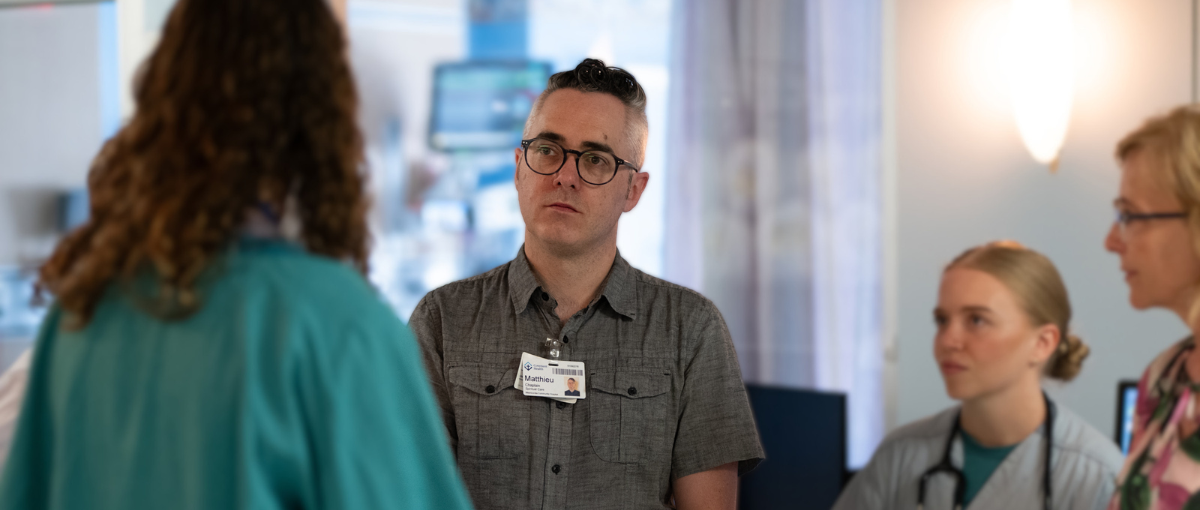
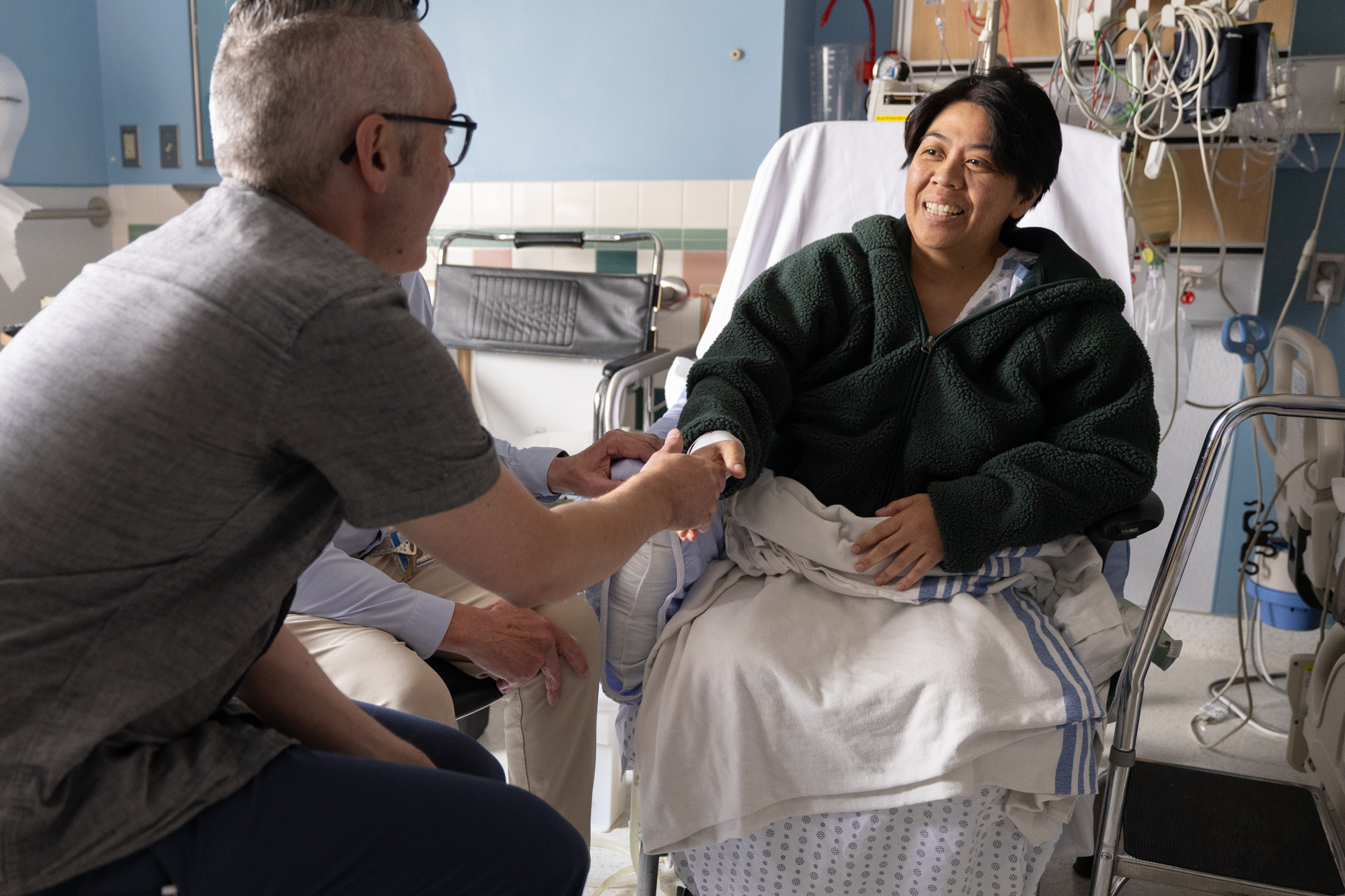
For Matthieu Coulombe, spiritual care chaplain at the Misericordia Community Hospital, compassion begins with taking a seat beside someone and listening.
He carries a small camping stool so he can sit beside patients, making room for their fears, grief, questions and stories. In moments when life feels uncertain or overwhelming, that simple act offers a sense of connection and someone to share the weight of what they are going through.
“It’s not just about standing at the edge of the bed and talking,” he says. “It’s taking a seat beside someone and saying, ‘I’m going to sit in the mud with you. This is a tough moment, and I’m here with you.’”
As a spiritual care chaplain with Covenant Health, Matthieu supports patients, families and staff through experiences that can be difficult to put into words. A hospital stay may bring uncertainty about a diagnosis, grief over lost independence or worries about life beyond the hospital. Sometimes, it brings an older loss back to the surface.
For Matthieu, understanding what is weighing on someone begins with making room for their story.
“I always tell people I’m a companion for the journey,” he says. “I don’t have all the answers.”
That understanding has roots in his own experience. Growing up with asthma, Matthieu was often in and out of hospital. He knew many of the nurses in his small town by name. Yet even with familiar faces and visits from family, he remembers feeling isolated and alone.
Years later, volunteering in long-term care introduced him to the experience of offering support to others. He pursued theological training, but continued to feel drawn to health care. When his spiritual care training brought him to the Misericordia for a placement, something clicked. Within three weeks, he knew he had found the work he wanted to do.
Today, that sense of purpose comes through in conversations with people who may begin as strangers and soon feel able to share something deeply personal.
“I don’t know why I’m telling you this. I don’t even know you,” patients sometimes tell him. By the end of a visit, they may say the conversation was exactly what they needed.
Some days, Matthieu checks in with patients on his assigned units. When he is on call, he may respond to trauma, end-of-life situations or families facing an unexpected loss. His work also includes supporting staff after difficult experiences, helping them process what happened and connect with further support when needed.
The people providing care need care themselves, he says.
“Your patients matter, but you matter as well.”
For Matthieu, this work puts Covenant Health’s compassion and collaboration into practice. He sees spiritual care as an integral part of a team working together to care for the whole person. Nurses, physicians and even housekeepers may notice when someone is struggling and help connect them with his team.
That shared commitment can also create moments of joy.
Recently, a patient awaiting a hospice bed told Matthieu he wanted to watch his sister’s wedding. She was getting married and he knew he could not attend.
Matthieu asked whether he would like a space where he could watch the livestream on a larger screen with family. From there, nurses, volunteer services and colleagues across several departments helped make it happen. A room was reserved, volunteers decorated it for a wedding celebration and the family brought food.
The patient got to share in his sister’s day.
“I might have gotten the ball rolling,” Matthieu says, “but it took many people to bring the celebration together.”
“That to me is what transformative health care should and can look like.”
He sees the same determination in the stories of Covenant Health’s founding Sisters, who found ways to respond when people needed help. For Matthieu, carrying that mission forward means learning what matters to each person and finding ways to honour it.
“We’re here for you. We start with you.”
Those conversations can lead in many directions. For one person, comfort may come from prayer or a visit from their faith community. For another, it may come from talking about a beloved dog and the sadness of being apart. Matthieu also works with Indigenous care colleagues to help patients connect with practices that are meaningful to them, including smudging.
He remembers one patient who was nervous about a spiritual care referral. The man wondered whether his atheist perspective would be respected. After their conversation, he told Matthieu how helpful the visit had been.
Each person brings a different story, and that is where the conversation begins.
When someone is unsure where to begin, Matthieu offers a simple invitation.
“You’re human and I’m human. Do you just want to talk?”
His hope is that everyone who comes through Covenant Health’s doors feels that their spiritual health is understood as part of their care, with space for their own sources of meaning, strength and connection.
“You have to be able to show up in the room in such a way where people feel like this person’s with me,” he says.