

Meet Megan Berg, occupational therapy student, St. Mary’s Hospital, Camrose
November 3, 2026
By Peter Rybar, social media and storytelling advisor
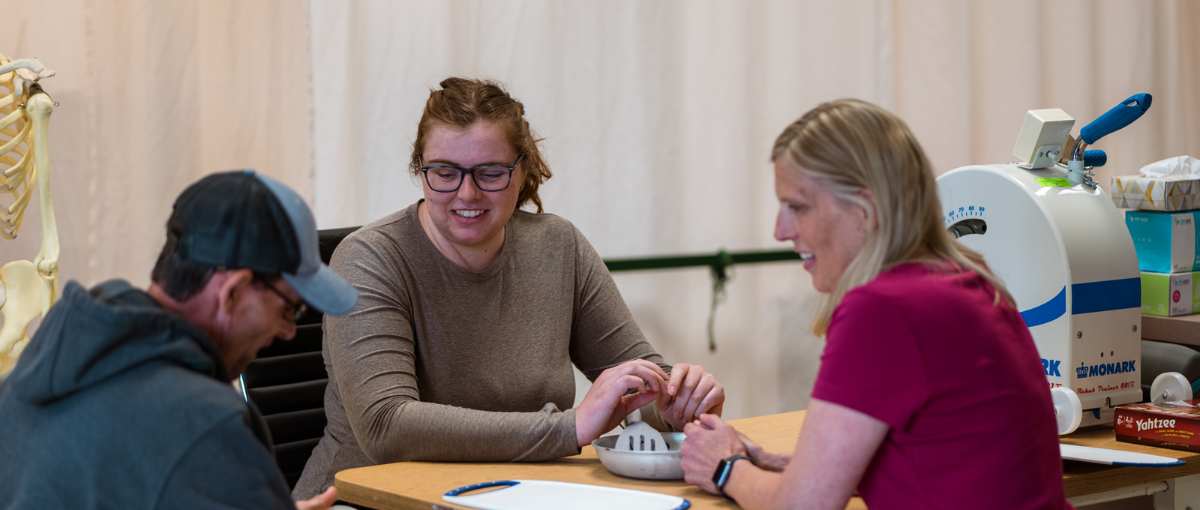
The day her client fed herself breakfast, Megan Berg saw a change she still thinks about. For months, the woman had relied on family for everyday tasks she once did on her own. She had been a homemaker and losing that work left her feeling her life had lost its purpose.
“When she was able to eat her own breakfast, you could see the sparkle return to her eye,” Megan says. “Slowly we could see her personality and joy coming back.”
Megan is a second-year student in the University of Alberta’s master of science in occupational therapy (MScOT) program at Augustana Campus in Camrose. She recently finished her first placement, six weeks with the Early Supported Discharge (ESD) program at St. Mary’s Hospital. Since 2012, the program’s team has provided in-home rehabilitation to people who have gone home after a stroke. The team travels to homes typically within 100 kilometres of Camrose.
“Everyday tasks or chores can be the difference between someone having a sense of purpose and joy in their lives,” she says.
Megan’s interest in occupational therapy (OT) goes back to when she was four years old. After a major spinal procedure, she spent time at the Stollery Children’s Hospital, where an OT made her sessions something she looked forward to.
“She allowed me to be a kid and still get the rehabilitation I needed,” Megan says. “I didn’t feel like a patient with her.”
That memory came back when she started looking at careers in high school. Still, the road to OT school took some detours. Megan finished a bachelor of science in biology during the height of COVID-19 and found online learning hard, so she stepped away from school. Over the next four years she worked in agricultural research, in the oilfield, as an environmental technician and in food services, including at a long-term care facility.
“I always came back to wanting to help people,” she says.
Time with residents in long-term care pointed her back to OT. “I wanted to work alongside people to meet their goals and support them on their journey, as my OT did so many years ago.”
When it came time to rank placements, the St. Mary’s posting caught her eye. She wasn’t sure what an early supported discharge team did, but she wanted to work with people who’d had a stroke. She also comes from a small Alberta community, plans to practice rurally and was already living in Camrose for school.
A typical day started at the ESD office. Megan and her preceptor, occupational therapist Andrea Taeger, planned their sessions and checked in with the rest of the team about how to build each other’s work into their visits. Then they packed their supplies and drove out to see one or two clients, usually in their homes, for an hour or more each. Some visits were assessments or intakes. Others were therapy sessions. All of them worked toward goals the clients set for themselves.
Andrea has worked at St. Mary’s for 17 years and joined the ESD team when it started. She did her own undergraduate degree at Augustana and has recently started working with its OT students.
The drives between visits became debriefs.
“I really appreciated this time, as I was able to ask questions and take note of where I had opportunities for growth,” Megan says.
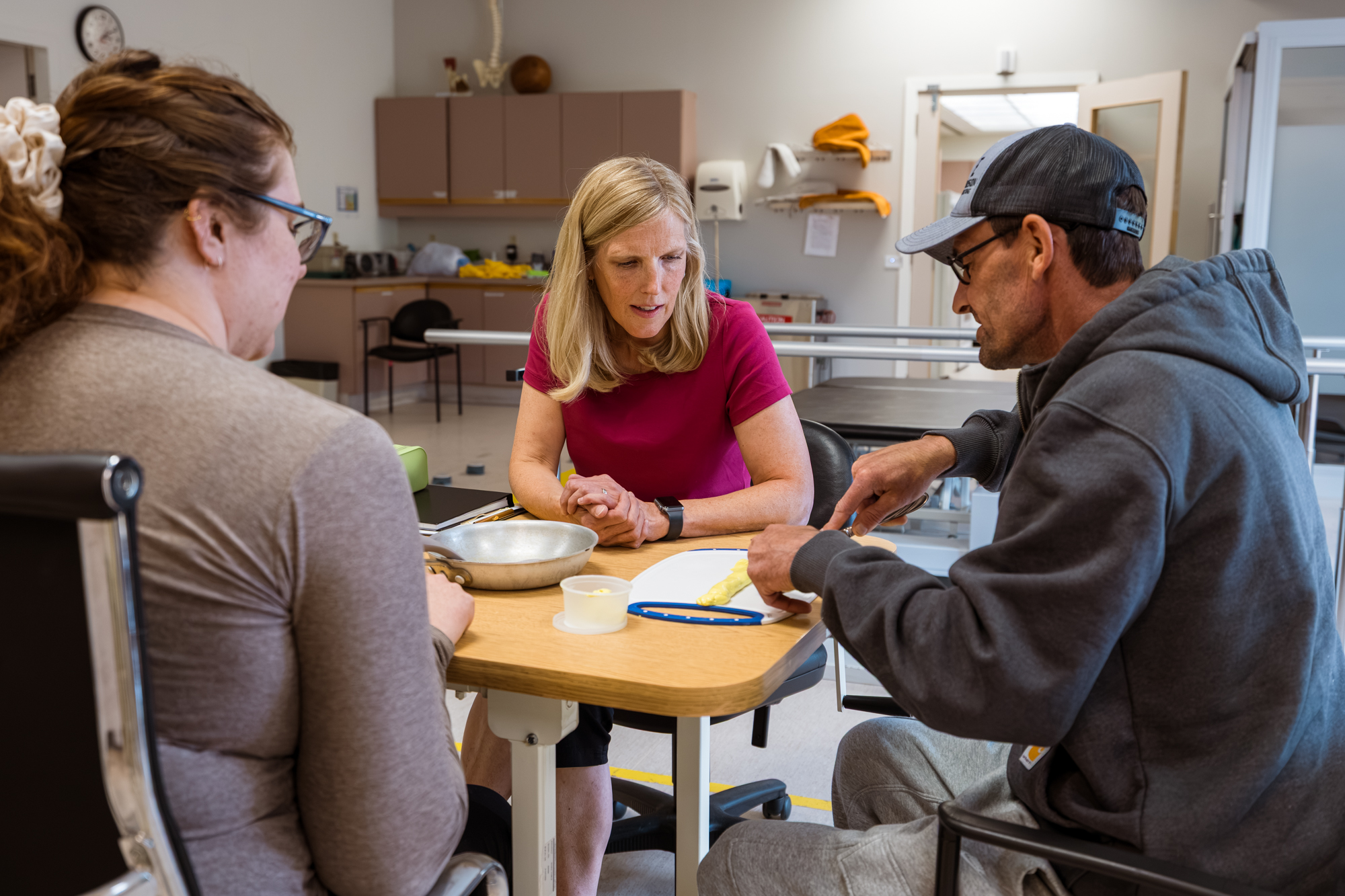
One of the biggest lessons from Andrea was to meet clients where they are. Megan remembers a client who was ready to try anything at one visit and not up for much at the next. Instead of pushing through, they asked why. The client had slept poorly the night before, so they changed the plan.
“Knowing when to push and when to back off allows you to form greater rapport with clients and makes them feel understood,” Megan says.
Andrea gave Megan a little more responsibility each week. By the end, Megan was leading sessions and building treatment plans, with detailed feedback afterward. When Megan ran into trouble mid-session, Andrea stepped in respectfully and kept things smooth for the client.
Megan says her biggest challenge was letting go of the pressure to be perfect.
“In OT practice it isn’t about getting an A+. It’s about connecting to your clients and helping them with their journey and goals.”
She worked through it by asking for feedback, using it and looking back at how far she’d come.
The wider team at St. Mary’s brought her into team meetings and asked for her perspective during rounds and chart reviews. “I felt like part of a team from the beginning and that I had purpose within the team,” she says.
Megan says the support she had as a student was “fantastic.”
“I felt that I had the perfect balance of being challenged and being supported,” she says. “I always knew I had somewhere to turn to when I needed help.”
Of Covenant’s values, collaboration stood out most. Megan describes a client with a range of complications after a stroke. Speech-language pathology, physiotherapy, therapy assistants, OT and nursing came together with the client and family to plan how to reach the goals the client had set.
“It was a wonderful display of teamwork and patient-centred care,” she says.
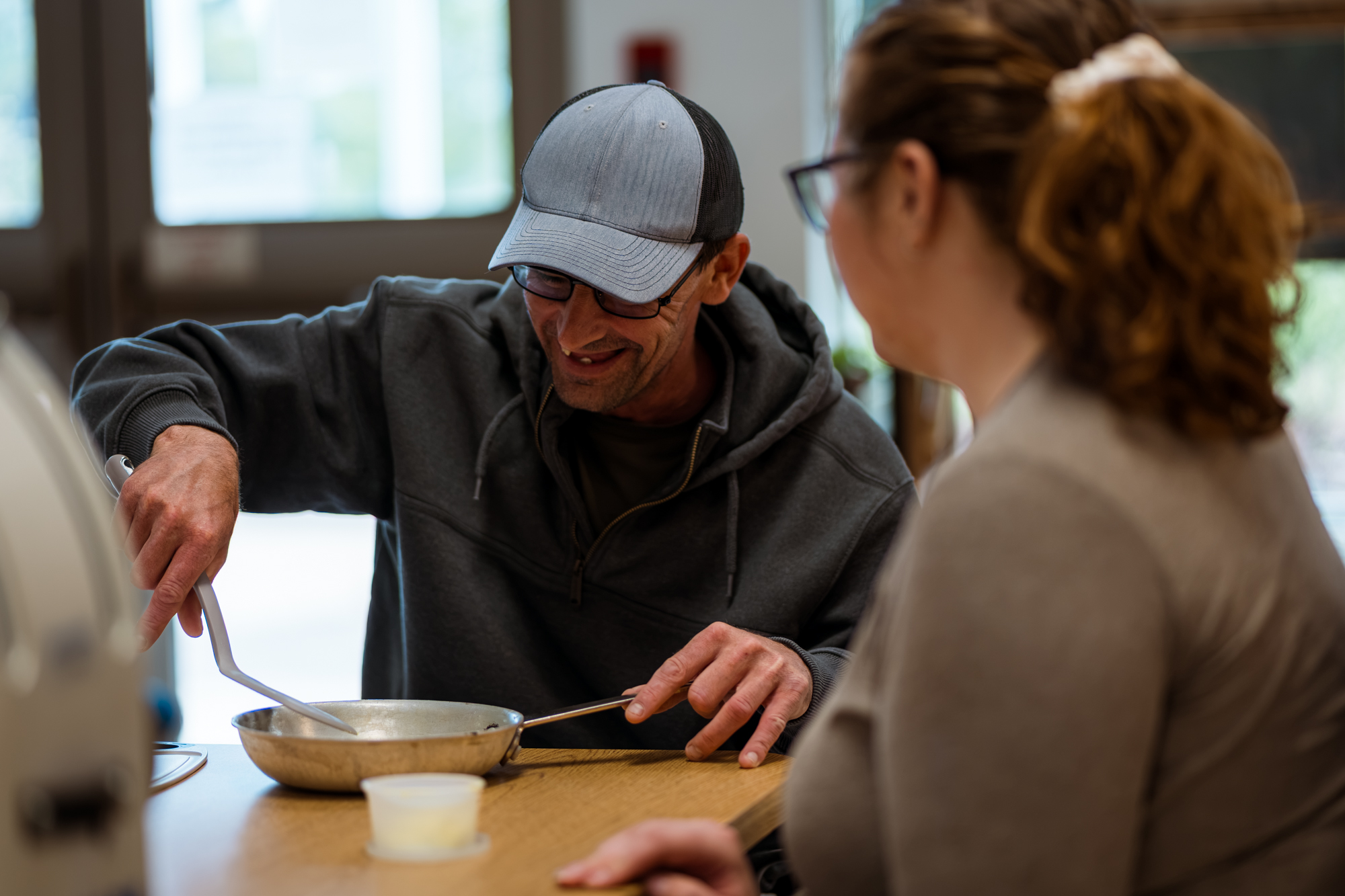
The placement also changed how Megan sees rural practice. She had heard that rural care tends to be general, not specialized. On the ESD team, she saw specialized stroke rehabilitation delivered in people’s own homes.
“I think there is such a need to have specialized OT care for our rural communities, so that people do not need to make large trips or spend limited finances on travelling to larger centres,” she says.
After she graduates, she wants to keep learning about neuro and stroke rehab and hopes to bring that kind of specialized care to her hometown.
“This placement reinforces my love of rural practice and has expanded my view of what it can be.”
Her advice for students heading into a first placement is simple. “Just breathe! It can be a lot to take in at first, but the learning and development you will have is invaluable. Also ask questions.”
Megan says the people are what would draw her back to Covenant after she graduates. She points to the whole care team, from nurses and therapy assistants to physiotherapists.
“I’d recommend a Covenant placement to another student because of the amazing community of caring and knowledgeable people you will have the opportunity to learn from.”