
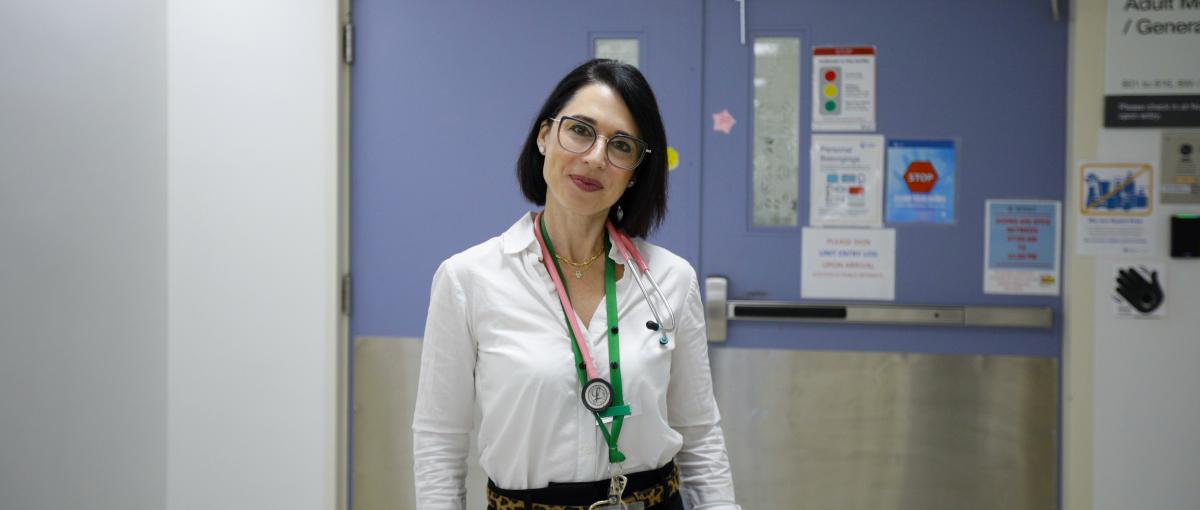
Meet Olga Muradov, nurse practitioner, internal medicine, Misericordia Community Hospital
November 20, 2026
By Peter Rybar, social media and storytelling advisor, Covenant
An elderly patient came to the unit frail, with several organ systems failing and a complicated situation at home. On paper, it looked like a straightforward medical decline. Then Olga Muradov sat down with the family.
“By taking time to sit down and talk with the family, we uncovered what really mattered to the patient: spending their remaining time at home comfortably rather than undergoing invasive interventions,” she says.
The care team built the medical plan around that goal. They managed the patient’s symptoms and arranged the supports needed at home.
“It was a powerful reminder that our clinical success isn’t just about curing illness,” says Olga. “It’s about honouring what matters most to the person in front of us.”
Today, Olga is a nurse practitioner (NP) on the internal medicine unit at the Misericordia Community Hospital in Edmonton. Her patients often arrive with several serious conditions at once, such as heart failure, chronic obstructive pulmonary disease (COPD), kidney failure, infections and cognitive decline. Her job is to work out how those conditions affect each other and get each person ready to go home.
Many people aren’t sure where an NP fits between a doctor and a nurse. Olga tells friends and family she can do much of what a doctor does. She performs physical exams, orders and interprets tests, diagnoses illnesses, prescribes medications and manages a patient’s full plan of care.
What she adds comes from nursing: a focus on how an illness affects the patient’s whole life, including their family and their return home.
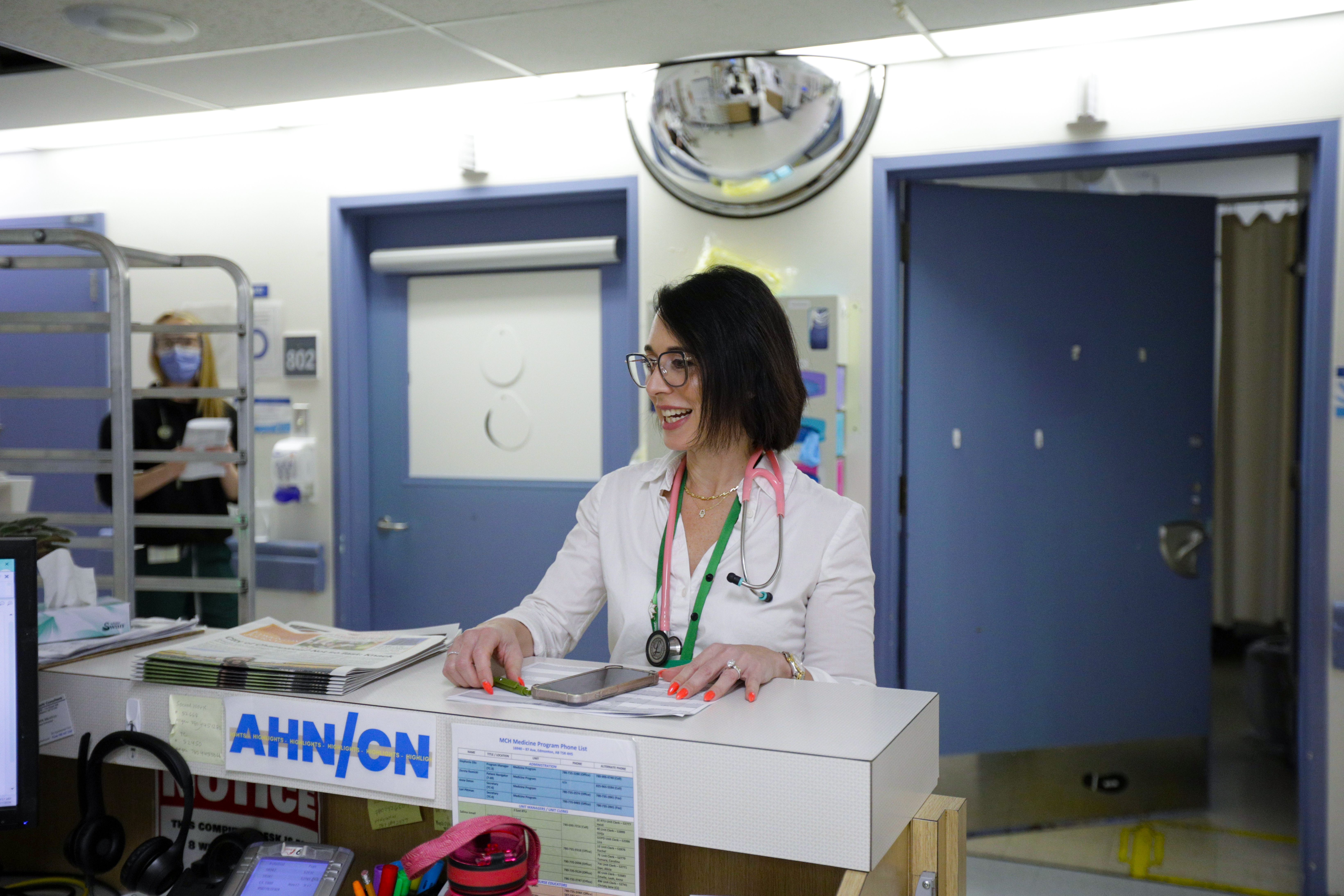
Olga started her career as a registered nurse (RN) in the intensive care unit, where she learned to manage complex medical patients under pressure. Over time, she wanted a bigger hand in the decisions: diagnosing complex conditions and guiding care from admission to discharge.
“Becoming a nurse practitioner felt like the natural evolution,” she says.
After several years at the bedside, she went back to school for her master’s degree and became an NP.
“That transition from bedside RN to NP was challenging, but having years of hands-on acute care experience made all the difference in building my clinical judgment,” she says.
The bedside still shapes how she practices.
“As an RN, you spend hours at the bedside observing the subtle changes in a patient and hearing their personal stories,” she says. “That experience taught me to listen deeply and treat the person.”
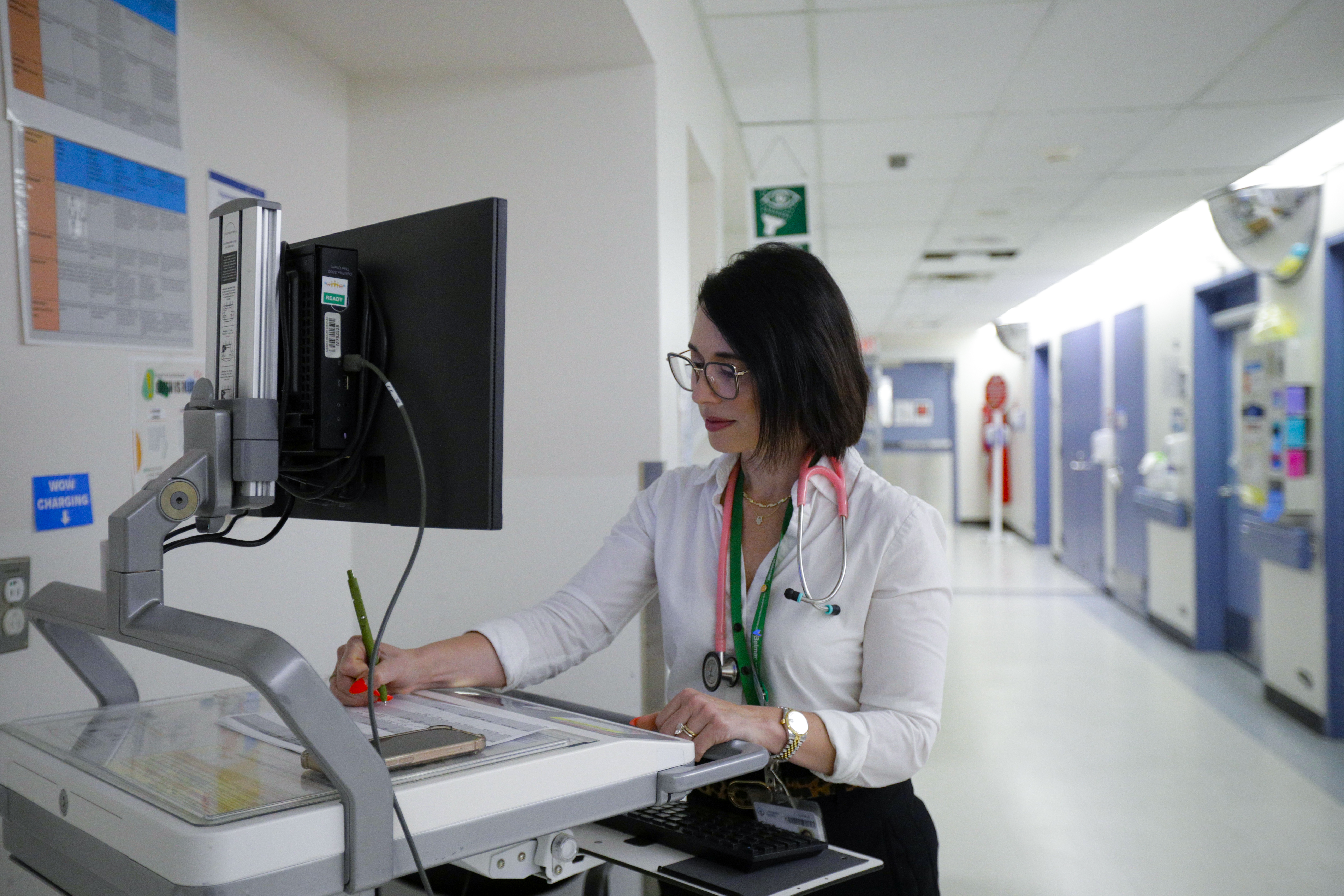
Her day starts with patient charts and test results, so she can decide who needs her first. Then come daily rounds with the wider care team. After that, she sees her own patients on the unit, doing exams and updating treatment plans. She makes time to talk with families too.
She works alongside internists, bedside nurses, unit clerks, pharmacists, physical and occupational therapists and social workers.
“It’s a fast-paced environment where continuous communication is key,” she says.
Patients with several conditions make the medicine tricky.
“It’s like assembling a complex puzzle,” she says. “When a patient has heart failure, diabetes and kidney disease simultaneously, treating one condition can affect another.”
Planning for discharge starts on day one. Pharmacy checks that medications are safe. Occupational and physical therapists look at mobility and safety at home. Social work and home care line up supports. Before anyone leaves, Olga makes sure the patient and family understand the plan.
That teamwork recently kept one patient from coming straight back to hospital. The patient was medically ready to leave, but allied health staff spotted subtle concerns about how safely the patient would manage at home.
“Together with social work and pharmacy, we adapted the care plan, arranged targeted home support and adjusted the medication regimen, preventing what would have likely been an immediate readmission,” she says.
Hospitals can be overwhelming and full of jargon, says Olga. She sits at eye level with patients and families and explains things in plain language. Early on, she asks them a direct question: “What are your main goals and worries right now?”
“When we involve them in daily discussions and set realistic expectations together, they feel supported and empowered as active partners in care,” she says.
The hardest part of the job is one most people never see. She carries the emotional weight of difficult diagnoses, sudden declines and family grief while still delivering high-level medical care. To recharge, she spends time with loved ones, gets outdoors, eats well and keeps clear boundaries so she comes back to work ready for her patients.
She sees compassion on the unit every day, from a bedside nurse spending extra time comforting an anxious patient to the whole team working out a plan for a patient with no supports at home.
“That culture of genuinely caring for vulnerable individuals is palpable at Covenant,” she says.
Olga chose Covenant because its mission matched her own approach to care. The people are what keep her here.
“The interprofessional team at the Misericordia is welcoming, dedicated and truly feels like a supportive family,” she says.
She didn’t expect that kind of closeness in a busy acute care hospital, where people across departments know each other and are quick to lend a hand. Covenant has given her strong mentorship from experienced NP colleagues and internists. Her leaders encourage ongoing education and give her room to grow her skills and take on leadership within the team.
Next, she wants to keep building her expertise in acute internal medicine and mentor new NPs and nursing students. She is also interested in quality improvement projects to improve patient flow and outcomes on the unit.
Her advice for RNs thinking about becoming an NP is to start at the bedside.
“Build a solid clinical foundation as an RN first! That bedside experience will be your greatest asset as an NP,” she says.
The lesson she uses most came from a senior mentor early in her training: “If you take the time to truly listen to the patient, they will tell you what’s wrong.”
“In a busy acute care setting, it’s easy to rush to diagnostic tests,” says Olga. “But taking those extra few minutes to listen remains the most valuable diagnostic tool I use every single day.”