

Meet Risa Koike-Auclair, food service worker, Banff Mineral Springs Hospital
October 6, 2026
By Stephanie Kalk-Hove, student, marketing and communications
As a child, Risa had her tonsils removed. Lying in a hospital bed, she decided she wanted to become a nurse.
“At the time, I really wanted to become a nurse,” she says. “But unfortunately, I hated blood so I couldn’t.”
Today, Risa is a food service worker at Banff Mineral Springs Hospital. She may not be a nurse, but she still spends her day close to the people she wanted to help.
“My background has always been in service. I worked in restaurants and retail,” she says. “Working at the hospital was my dream job. When I found this position, I really wanted it, and I’m so glad to be part of the hospital team.”
A day built around the clock
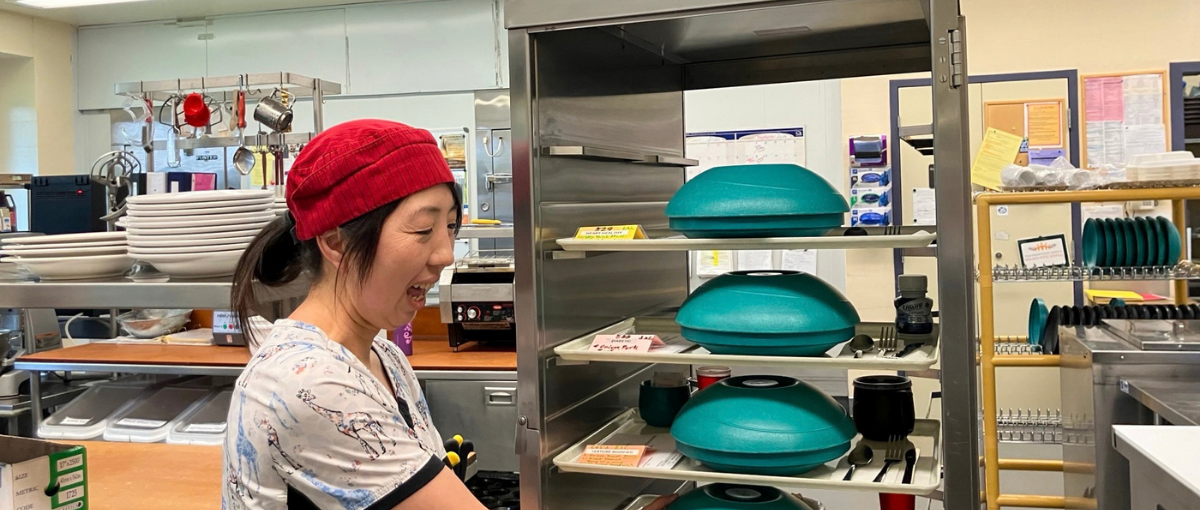
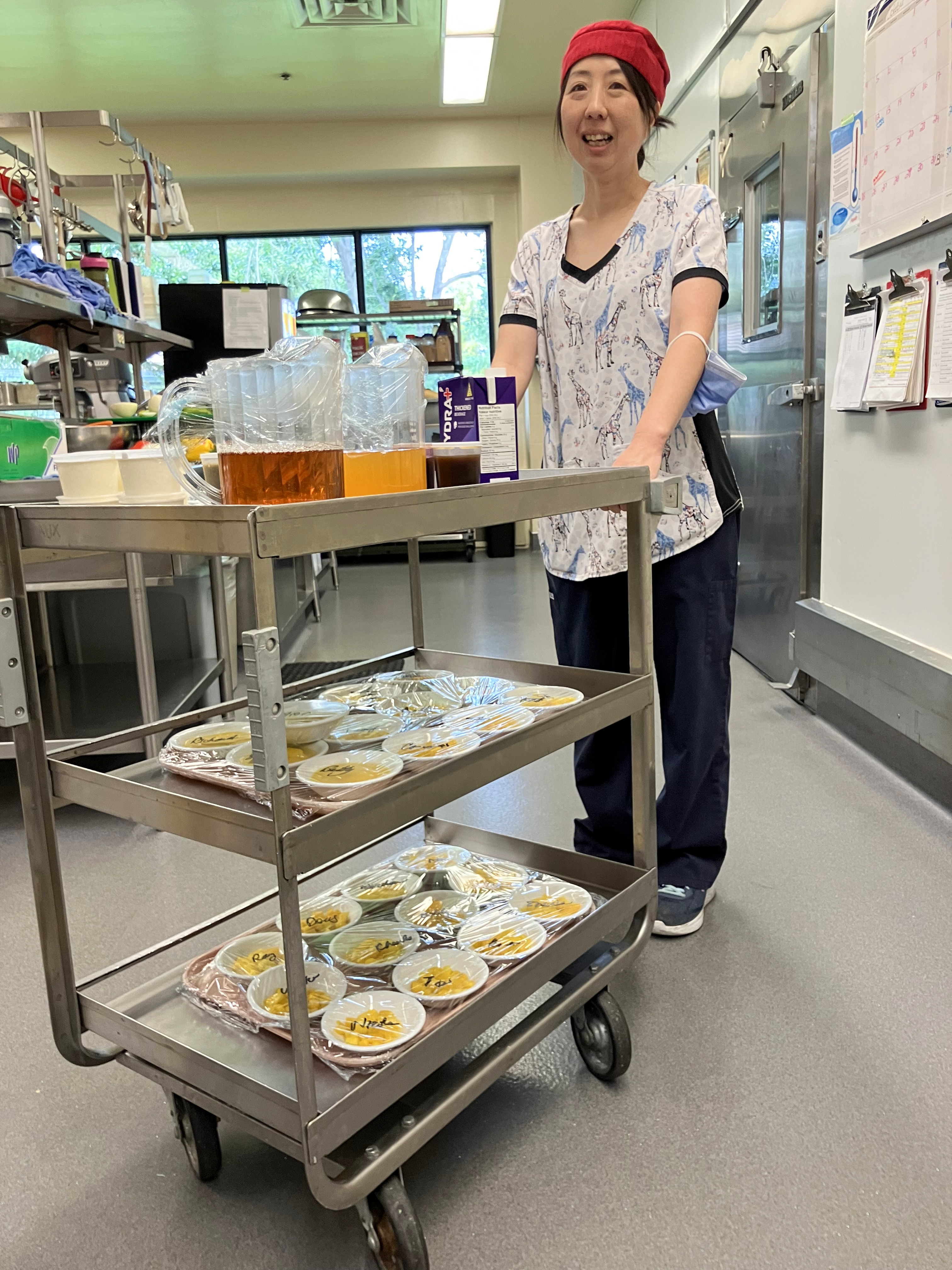
Risa’s shifts follow the rhythm of the hospital’s mealtimes. In the morning, she checks in on how many patients are in acute care and what diets they need, then she helps pack a hot, fresh meal. Before a tray leaves the kitchen, she and her team double-check the room number, the resident name and their diet order.
“That’s our final check, to make sure nothing gets mixed up,” she says.
She also serves long term care, where residents choose between two meal options and get offered juice, or hot beverages, such as coffee and tea. After breakfast, she goes around collecting dishes and has a moment to chat with residents. The morning shift covers breakfast and lunch, while the evening shift covers supper.
In the evening, she restocks long term care with supplements and juice and serves supper. Cleaning duties fill the gap between services.
“Everything runs on a schedule,” she says. “That can be hard to adjust to at first.”
More than a tray of food
Risa says the most demanding part of the job is not the schedule; it is reading people.
“Especially in long-term care, some residents have dementia, and their mood can be different every day,” she says. “I always try to approach with a smile. I say hello or good morning and use their name, so I get a sense of how they are doing. If it’s not a good time to talk, I let them be. If they respond well, we might have a longer conversation.”
That attentiveness carries into patient safety, too. Risa says she watches for residents who need a cane or walker but are not using one and flags it to a health care aide.
An extended family
Risa has worked at the hospital since 2013, with two maternity leaves along the way. The years have turned coworkers and residents into something closer to family.
“We get to know each other over the years. Family members will come in and chat with us sometimes,” she says. “It feels like an extended family. Everyone looks out for each other.”
Long-term care is where those relationships take root, she says, because the same residents are there day after day. Acute care, by contrast, moves quickly.
“In acute care, people come and go, so we don’t build up the same kind of connection,” she says. “But in long-term care, we really get to know each other.”
Recognition she already feels
Healthcare Foodservice Workers Week, which recognizes the dedicated people who nourish patients, residents, staff and visitors every day, is Oct. 5 to 11, 2026. Risa says the recognition is welcome, though she already feels valued.
“I believe everyone should feel proud of their role,” she says. “Especially in long-term care, family members tell us the food is great, and that they appreciate our work. That is the reward.”
What has kept her in the job for so long is simple.
“I like talking with the elderly people. They’re so sweet and often make my day,” she says. “Every job has its challenge, but most of the time, this one is fun. We connect with people every day, and we get to know each other. That’s what I love about it.”