
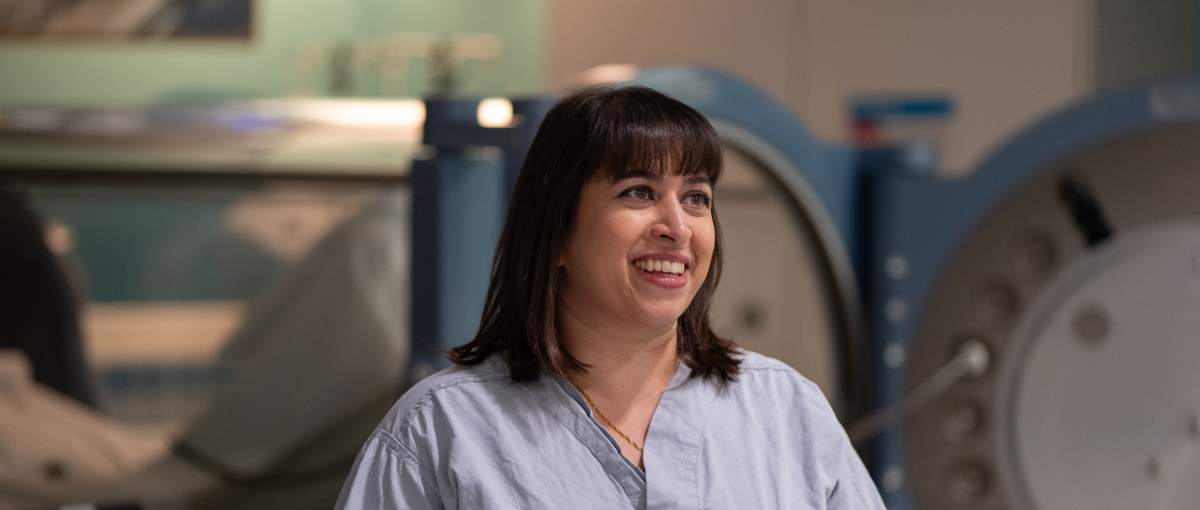
Meet Smita Gopal, respiratory therapist, Misericordia Community Hospital
October 29, 2026
By Peter Rybar, social media and storytelling advisor
Smita Gopal was training to be a respiratory therapist in Edmonton when she learned the job didn’t exist in the United Kingdom, where she is originally from. She wanted to know who did that work in British hospitals. So she arranged to complete two weeks of her clinical rotations in London while she spent her summer there.
“It was a fascinating experience, but I learned that it would not be a viable option for me if I chose to move there permanently,” Smita says. “They have a system in place that I don’t think will ever include a specific respiratory therapy role.”
Nearly 20 years later, Smita is a respiratory therapist (RT) at the Misericordia Community Hospital in Edmonton. It was her first choice of workplace, and she has stayed for her whole career.
“We are the health care workers who are there when a person is struggling to breathe,” she says. “Whether it’s their first breath or the last, an RT is there to help patients along.”
Before she found respiratory therapy, Smita had never been interested in health care. Like many Grade 12 students, she wasn’t sure what she wanted to do, and her work experience was part-time jobs in retail and hospitality. Then the respiratory therapy booth at a Northern Alberta Institute of Technology (NAIT) open house caught her attention.
At a follow-up information session, the RT presenting “did such a great job of explaining the profession that I was sold,” she says.
“Looking back, I had very little idea of the full scope of respiratory therapy, but I’m glad I took that chance because it turned out to be the right career for me.”
She started NAIT’s three-year RT program straight out of high school. About half of it was clinical experience, and she says she learned the most hands-on, in the lab and with patients. The Misericordia hired her at the end of her last year.
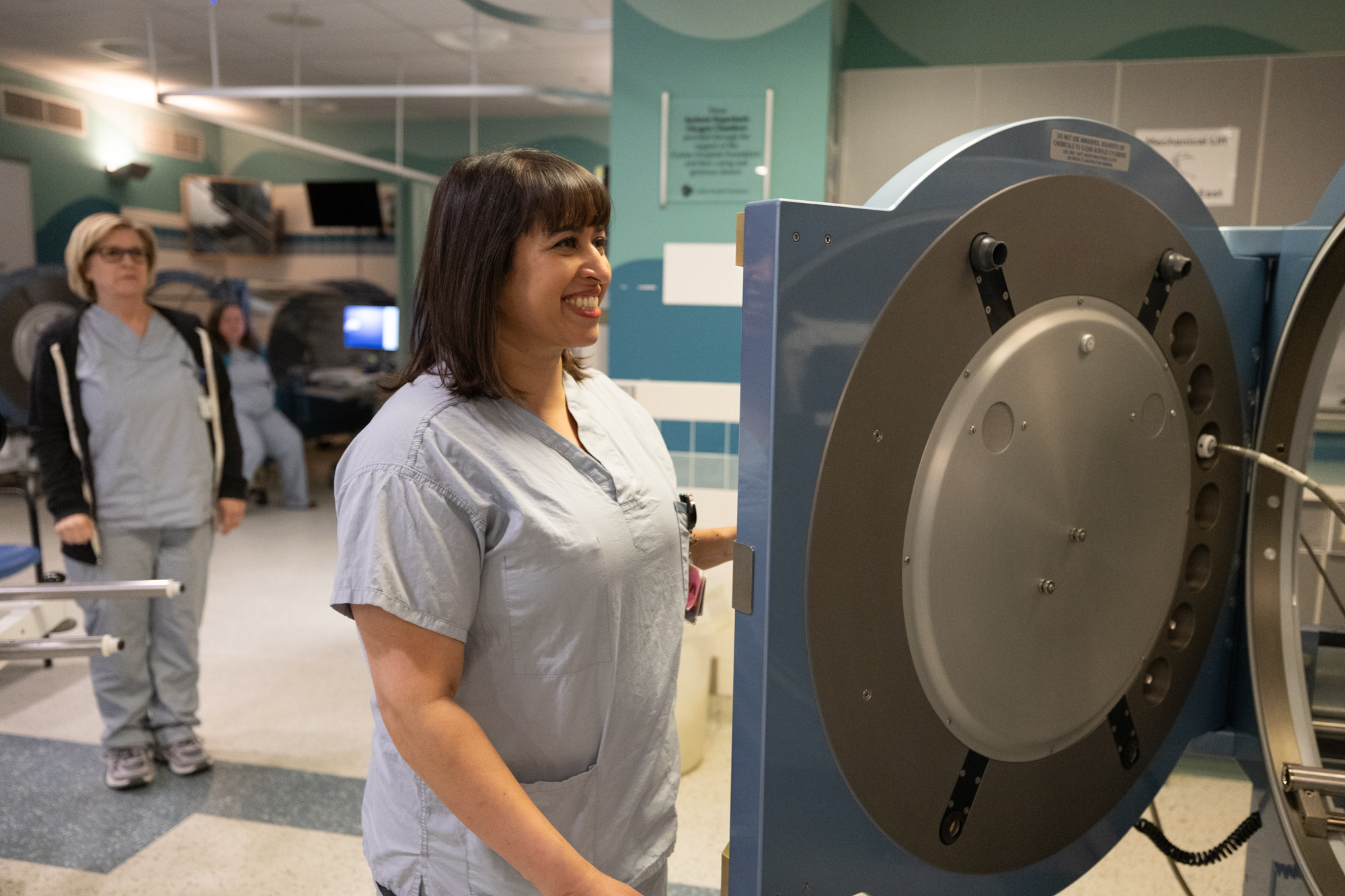
Today, she rotates through the hospital’s units, from emergency and intensive care to neonatal intensive care, medicine and surgery. Her patients range from newborns to seniors. She recently trained in hyperbaric oxygen therapy too.
“It adds another layer to my knowledge and skills,” she says.
A shift starts with report from the RTs going off duty: who the patients are and what to watch for. When she can, Smita takes time to plan her workload, seeing the sickest patients first and reading through their charts “so I have a full picture of the patient.”
What would surprise most people, she says, is how complicated breathing can be.
“It’s something most of us do without even thinking about it, but when something goes wrong, it’s very serious.”
RTs don’t only see people with lung conditions. Many other illnesses affect breathing too. Part of the job is assessing patients and responding when someone’s condition changes.
Some moments take a whole team. When a patient’s heart stops and they stop breathing, a leader, usually the doctor, runs the response. One person keeps time on chest compressions and medications, and another charts everything. One or two RTs manage the airway while nurses and support staff do CPR, start IVs and give medications.
“Everyone brings something important to the team, and we rely on each other to give the patient the best possible chance,” Smita says.
The hardest part of the job, she says, is losing patients.
“Many people have heard the term ‘pull the plug’ but probably don’t realize that it is the RT who does the actual plug-pulling,” she says. “These moments require compassion, sensitivity and respect for the patient and their family.”
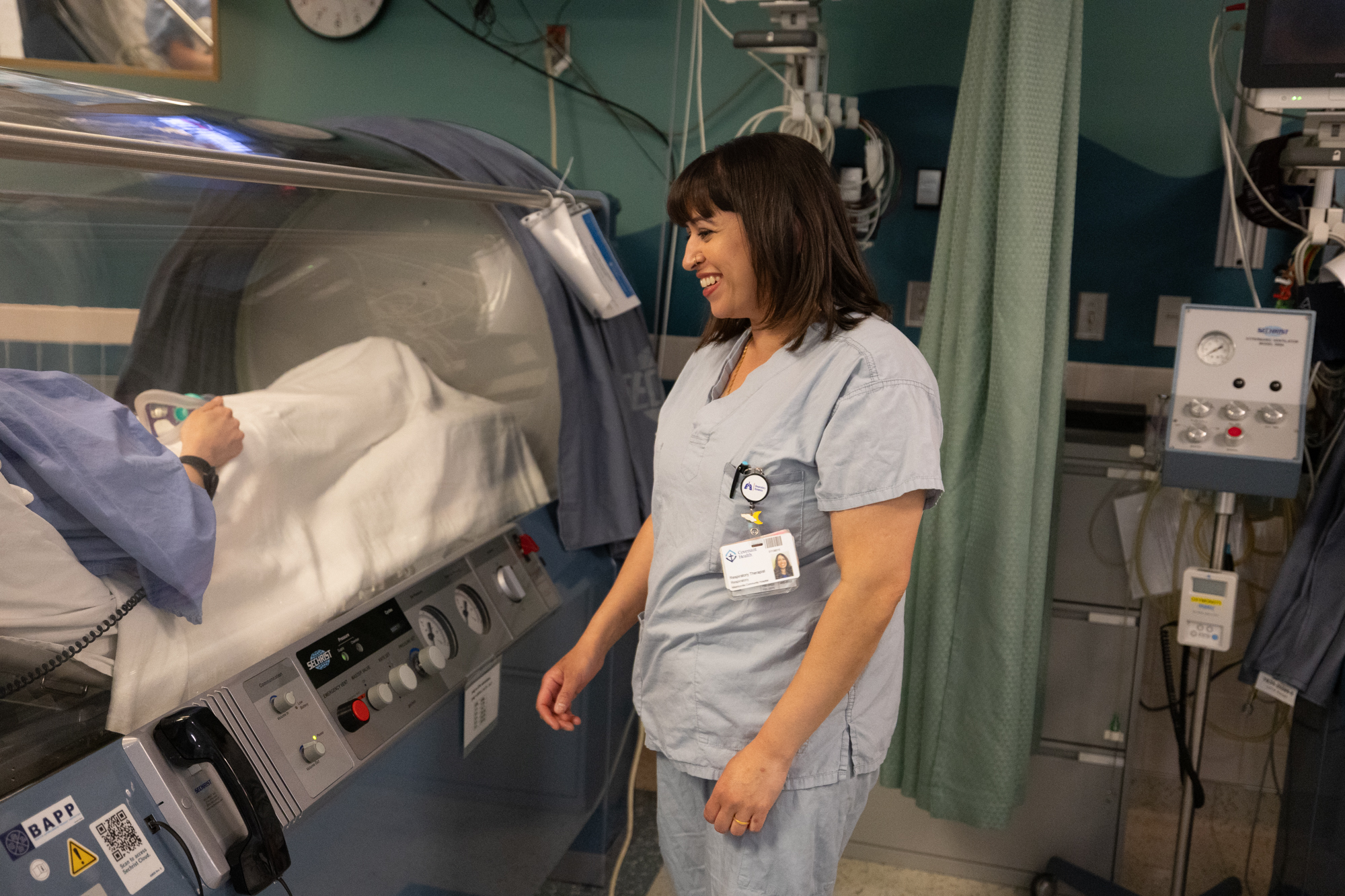
In her time as an RT, she has seen extraordinary compassion, from caring for people at their worst with dignity and respect to being with a patient as they take their last breaths when family can’t be there. Most often, she says, compassion shows up in “the small but meaningful things we do,” like reassuring someone who is frightened or listening to a patient’s concerns.
Smita has carried many patients with her over the years.
“They’ve taught me not to underestimate what people are capable of enduring,” she says.
After a tough shift, Smita turns to gratitude and meditation. She started meditating during the COVID-19 pandemic.
“It has proven to be invaluable to my mental health and helps me process the emotional demands of the profession,” she says.
Covenant Health has given her room to keep growing, she says, with chances to build her skills and keep up with new technology.
But the reason she chose the organization in the first place, and the reason she stays, is simple.
“I feel that I am respected by my colleagues,” she says.
The Misericordia RT team is “close-knit” and relatively small, Smita says, but the team’s role is recognized across the hospital. She didn’t expect to build so many lasting relationships with other RTs and health care professionals when she started.
“Working alongside people who support and respect one another makes a real difference, both personally and professionally,” she says.
She plans to keep learning, mentoring and helping others grow in the profession. For anyone considering respiratory therapy, her pitch is short.
“It’s a career that challenges you, teaches you continually and gives you the opportunity to support people when they need it most,” she says. “Nearly 20 years into my career, I still feel passionate about the work, and I think that says a lot about the profession.”