
Metabolic carts help dietitians fight malnutrition at two Edmonton hospitals
October 9, 2026
By Peter Rybar, social media and storytelling advisor
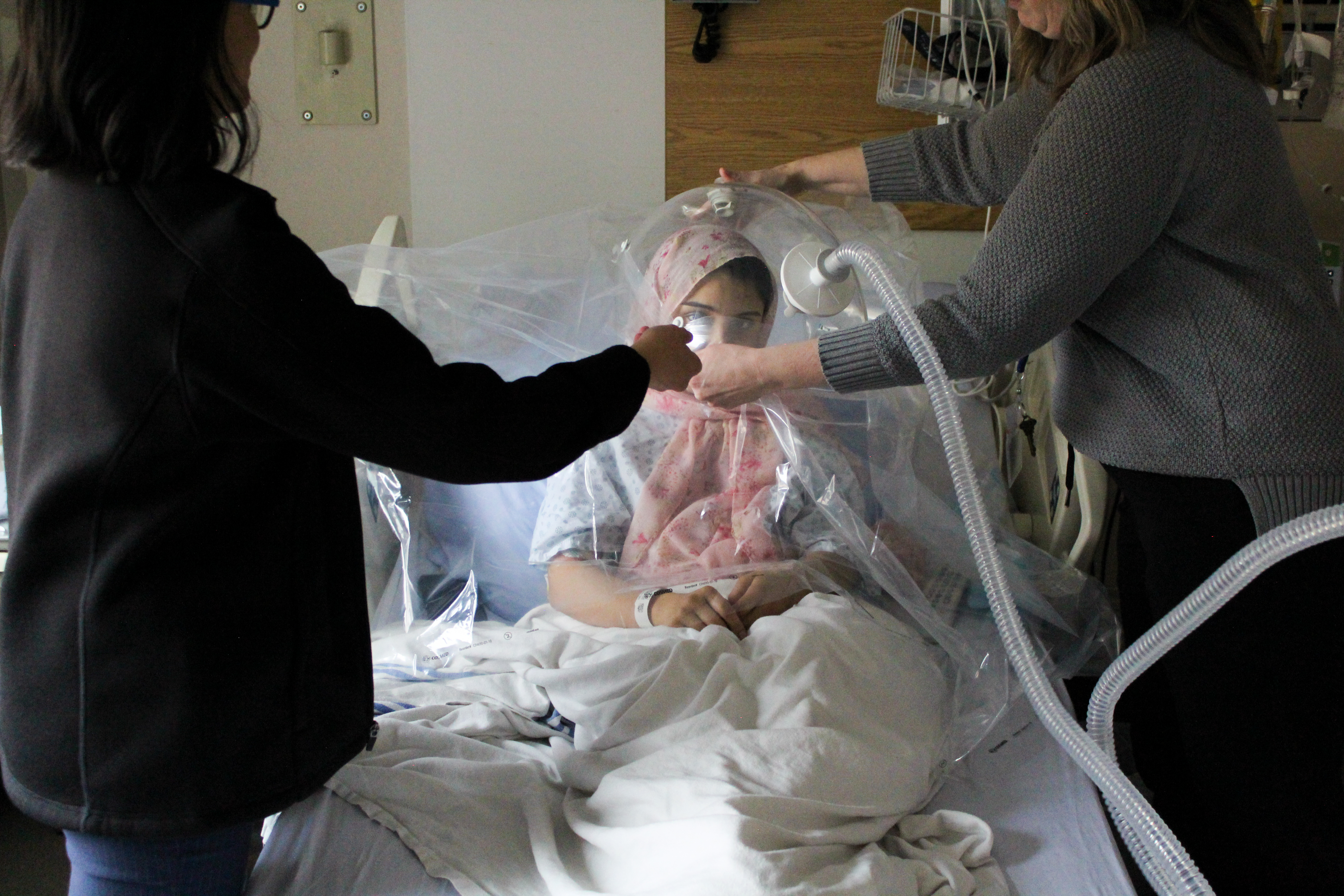
For about 15 minutes, all the patient has to do is breathe. A clear plastic canopy, a bit like a space helmet, rests over their head while a small monitor on wheels reads each breath.
When the test is done, a registered dietitian knows how much energy that patient’s body burns at rest and whether they’re getting the right amount of nutrition.
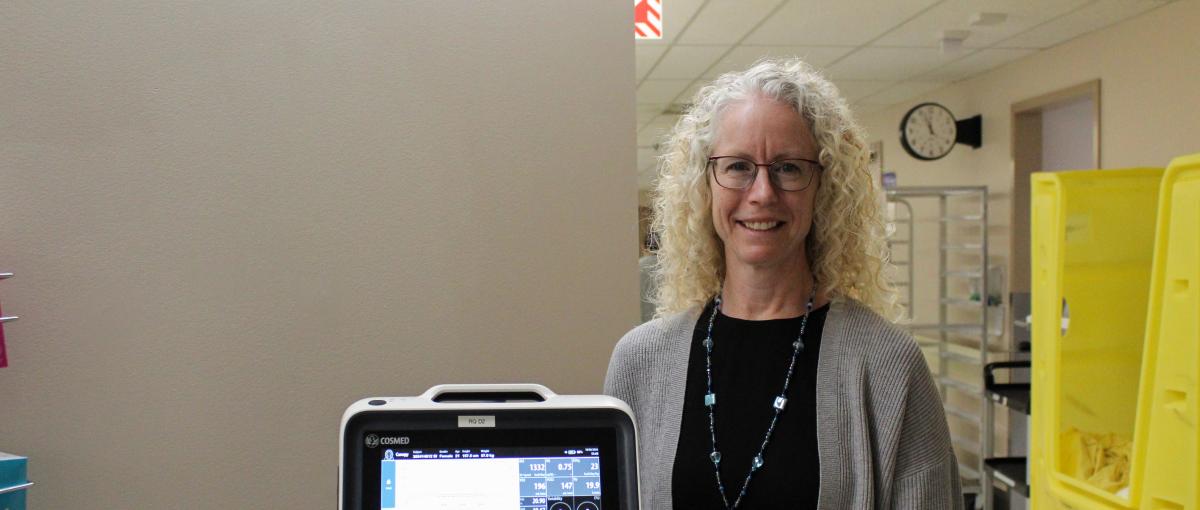
“It gives us numbers that we can use to see if we’re feeding patients enough calories and gives us an idea of what fuel they are burning,” says Christy O’Donnell, manager, nutrition services for the Edmonton Zone. “If we aren’t, then we can change the nutrition we’re providing because of this machine.”
The monitors, called metabolic carts, arrived at the Grey Nuns Community Hospital and Misericordia Community Hospital last year thanks to a Covenant Foundation grant.
Dietitians at both hospitals now use them to more accurately measure patients’ energy needs and guide nutrition care for people at risk of or experiencing malnutrition, which affects 45 per cent of adults admitted to Canadian hospitals for more than two days, according to the Nutrition Care in Canadian Hospitals study.
Before the carts, dietitians estimated a patient’s needs with predictive equations. There are versions for critically ill patients on ventilators and general versions for men and women, but “it is kind of a one-size-fits-all,” says Christy.
The gap between that estimate and reality can be large.
“Between our predictive equations and the metabolic cart, it can be a 500 to 1,000 calorie difference, on either side,” says Christin Barber, program manager, corporate nutrition services and Edmonton Zone acute nutrition, food, linen and environmental services.
Christy says some results have surprised her staff. “We are both under and overfeeding our patients, showing us that equations only give an average estimate.”
Getting it wrong either way has consequences. Christy says overfeeding a patient on a ventilator can delay getting them off the breathing tube. Getting it right supports healing.
“If we are providing adequate nutrition, we are supporting the patient’s well-being and hopefully getting to a faster discharge,” she says.
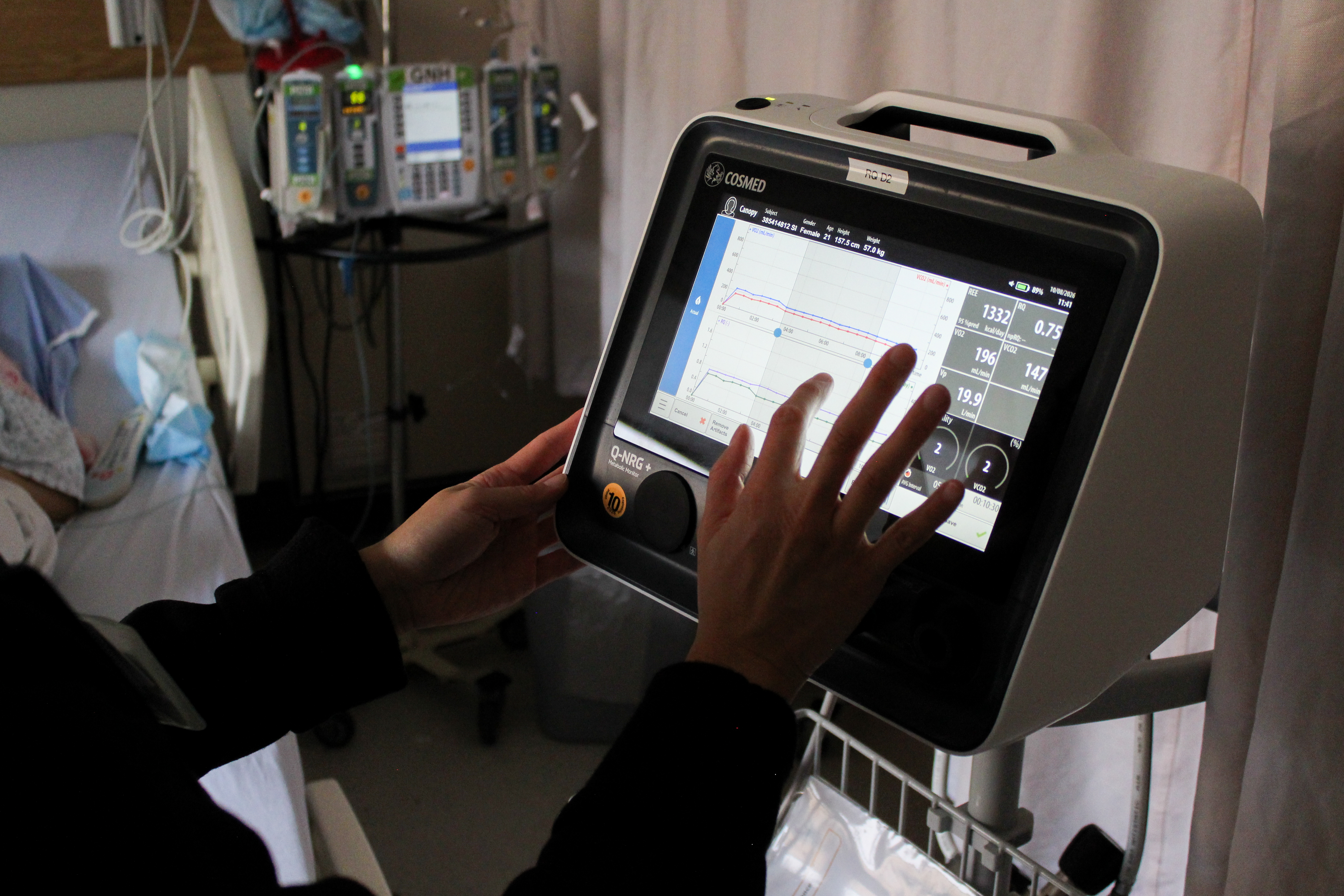
The carts are Q-NRG+ metabolic monitors from Baxter, and the test is non-invasive. For patients in the intensive care unit (ICU), the cart connects to the ventilator with help from respiratory therapists. Patients breathing on their own rest under the canopy. The results also show which type of fuel the body is burning.
That detail helps when a patient’s numbers won’t budge. Christin points to people admitted with a flare of a gastrointestinal disease such as Crohn’s.
“We’re feeding them and we’re just not seeing their nutrition markers move,” she says. “When we cart, we’re realizing the fuel they’re burning is not what we need, so then we can adjust.”
Dietitians use the carts most in the ICU, where a patient’s needs can change drastically between day one and day seven. They also test patients on tube feeding or parenteral (IV nutrition), along with patients who have significant wounds or have lost muscle mass. About 80 per cent of Christy’s permanent staff are trained on the carts, which also see regular use on surgery, medicine and stroke units.
Christy says patients going home on tube feeding or IV nutrition now leave with a more precise prescription. Christin says the numbers also help patients, especially older ones, understand why nutrition matters. “For some of them, a light bulb goes off.”
Getting the carts took persistence. Christin and Christy applied for a Covenant Foundation grant three years in a row, strengthening the application each time. By the second year, Christin says, the foundation was interested and looking for a donor. The third application was funded.
“It costs just over $50,000 for the machine and some of the consumables per site,” says Christy. “That’s not money we have readily available in our budgets.”
Christin puts it plainly. “Without the funding, we would not be able to do this at all.”
Dietitians have run over 50 tests with the carts so far, and Christy expects that number to grow.
“We are hoping to start seeing more of an uptick with more dietitians trained and increasing confidence in using the cart,” she says.
She wants to build a community of practice linking dietitians at both hospitals. Christin says the team is exploring other tools that could give smaller rural sites similar information.
“Nutrition isn’t always a top priority for many patients,” says Christin. “They want to know their med schedule or if they’re going for an X-ray. Behind every measurement is a patient who is trying to recover. If we can better understand what their body needs, we can help give them the best chance to heal, recover and make a safer journey home. So to put a number in front of them that they can see, they realize, ‘Oh, the meals that are coming, I do need to eat.’”