

New program helps graduate nurse transition into rural emergency care

May 14, 2026
By Peter Rybar, social media and storytelling advisor
The Code Blue came in just as the shift was winding down. Aksa Jacob, a graduate nurse barely a month into her career, watched as paramedics rushed in a patient who had gone into cardiac arrest. Her senior nurse had been called away, leaving her under the care of another nurse on the unit. Suddenly, she was the one charting every compression, every medication, every second of a life hanging in the balance.
"It was towards the end of the shift, and people just thought nothing major was going to happen," Aksa says. “But obviously that happened. I think that's when I felt fully independent. It was kind of scary, but it made me feel like I was no longer just a nursing student. I was a nurse.”
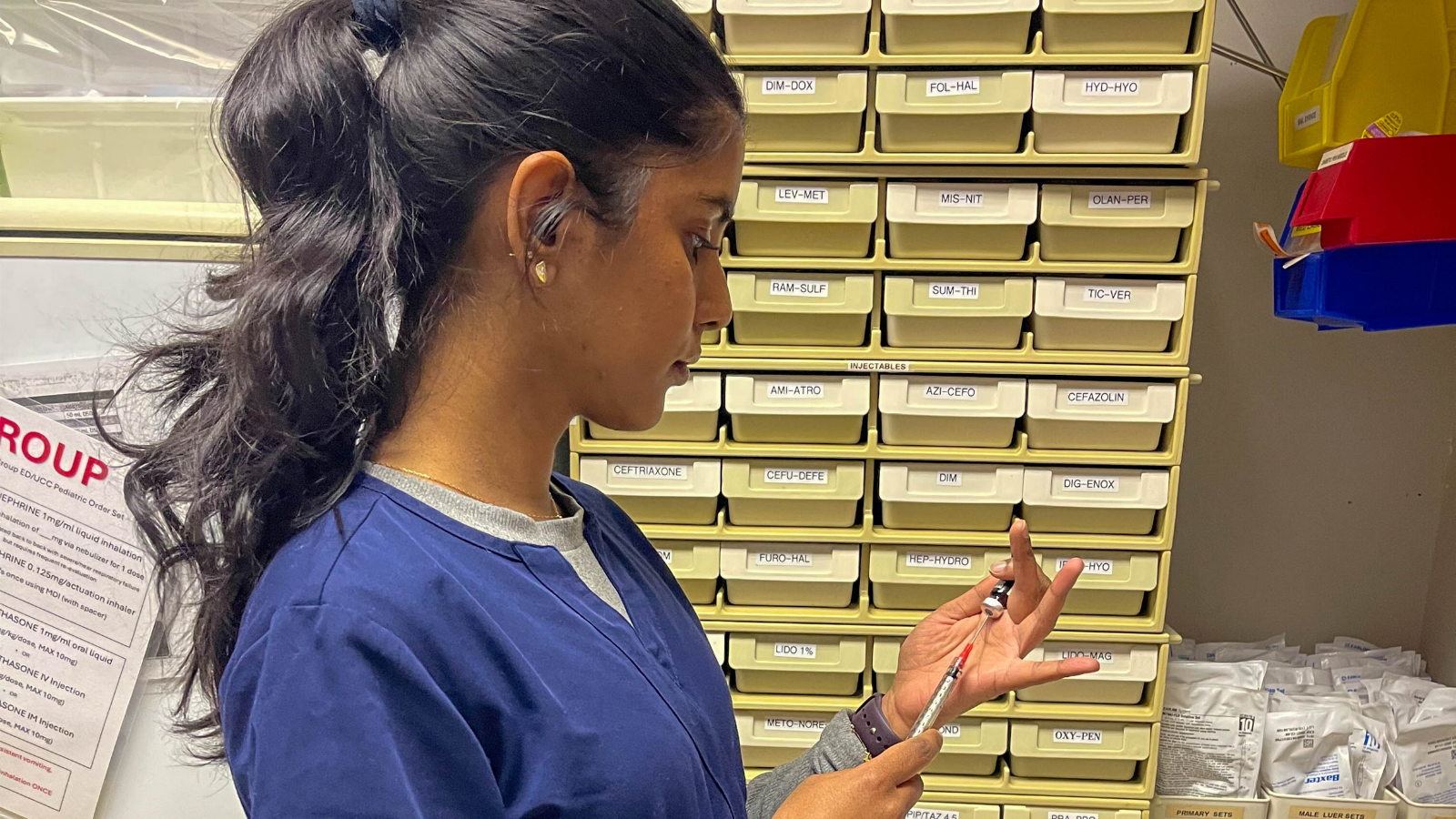
That moment, equal parts terrifying and transformative, is exactly the kind of experience the new Graduate Nurse Transition Pilot Program (GNTPP) is designed to support. Launched by Covenant Health in partnership with the United Nurses of Alberta, the 12-month program pairs new registered nurse and registered practical nurse graduates with experienced clinical guides during an extended orientation, then transitions them into independent practice with ongoing mentorship. Aksa is one of the first participants at the Bonnyville Health Centre, where she works in the emergency department.
Tackling a growing crisis in nursing
The program addresses a growing crisis in nursing. Recent data shows many new graduate nurses leave the profession within their first two years, citing burnout, lack of support and the overwhelming jump from student to independent practitioner. For rural sites like Bonnyville, where recruitment has always been challenging, losing new graduates has real consequences for patient care, says Samantha Karasiuk, a registered nurse with 15 years of experience who serves as Aksa’s clinical guide.
“When a new grad nurse doesn't get structured support, they often leave either the profession or the unit or site. I have witnessed instances where an amazing nurse is not supported when being new to rural or emergency room nursing, and their confidence is crushed.”
For Aksa, who completed her nursing degree through Keyano College's collaborative program with the University of Alberta, the choice to apply for the GNTPP came down to one thing: she wanted to work in the emergency room but knew she wasn't ready to be thrown in.
"Most of my clinical experience, and even my preceptorship, was in medical-surgical, so I was scared to go into the emergency room program without any background," she says. “When I saw they had a transitional nursing program open in a rural setting, I thought that was the best possible opportunity for me to learn.”
A gradual introduction to independent practice
The structure of the GNTPP unfolds in two phases. During the first three to six months, participants are supernumerary, meaning they don't count toward baseline staffing. They work elbow to elbow with their clinical guide, who provides oversight, regular check-ins and assessments of practice readiness. After that, participants transition into independent practice within the same unit while continuing to receive mentorship for the remainder of the year.
"A traditional mentorship involves being there to support the new grad, while the GNTPP is more of a hands-on opportunity to work directly alongside the new nurse before transitioning to the mentorship phase," says Samantha. “Often with mentorships, the new staff gets thrown into a full assignment due to staffing shortages, and there is a sink or swim mentality. With this program, there is more of a gradual introduction.”
That gradual introduction has made all the difference for Aksa, especially when it comes to triage, an area she found particularly intimidating as a new grad.
“Triage is such a new world for me,” Aksa says. “I've never done it before. Yes, someone might come in with chest pain, but knowing what symptoms can be related to a heart attack versus regular chest pain, it was very hard for me as a new grad to figure that out. Sam would come in, review what I wrote and give me tips.”
Safe to ask questions, safe to learn from mistakes
Beyond the technical skills, Samantha says her role is also about creating an environment where it's safe to ask questions and even safer to make small mistakes.
"A huge part of being a clinical guide to me is making sure that the new nurse can rely on me to support them and that they feel comfortable approaching me for help and guidance," she says.
That philosophy was tested when Aksa nearly made a medication error involving normal saline. Although the mistake was caught and caused no harm, Samantha pulled her aside and asked her to complete a Reporting and Learning System (RLS) report on herself.
"Initially, having to complete an RLS made me extremely disappointed in myself, but looking back, it was a learning moment," Aksa says. “It helped me take accountability, slow down, become more mindful by not repeating the same mistakes again and ensuring my patients' safety remains on top.”
Investing in nurses for the long term
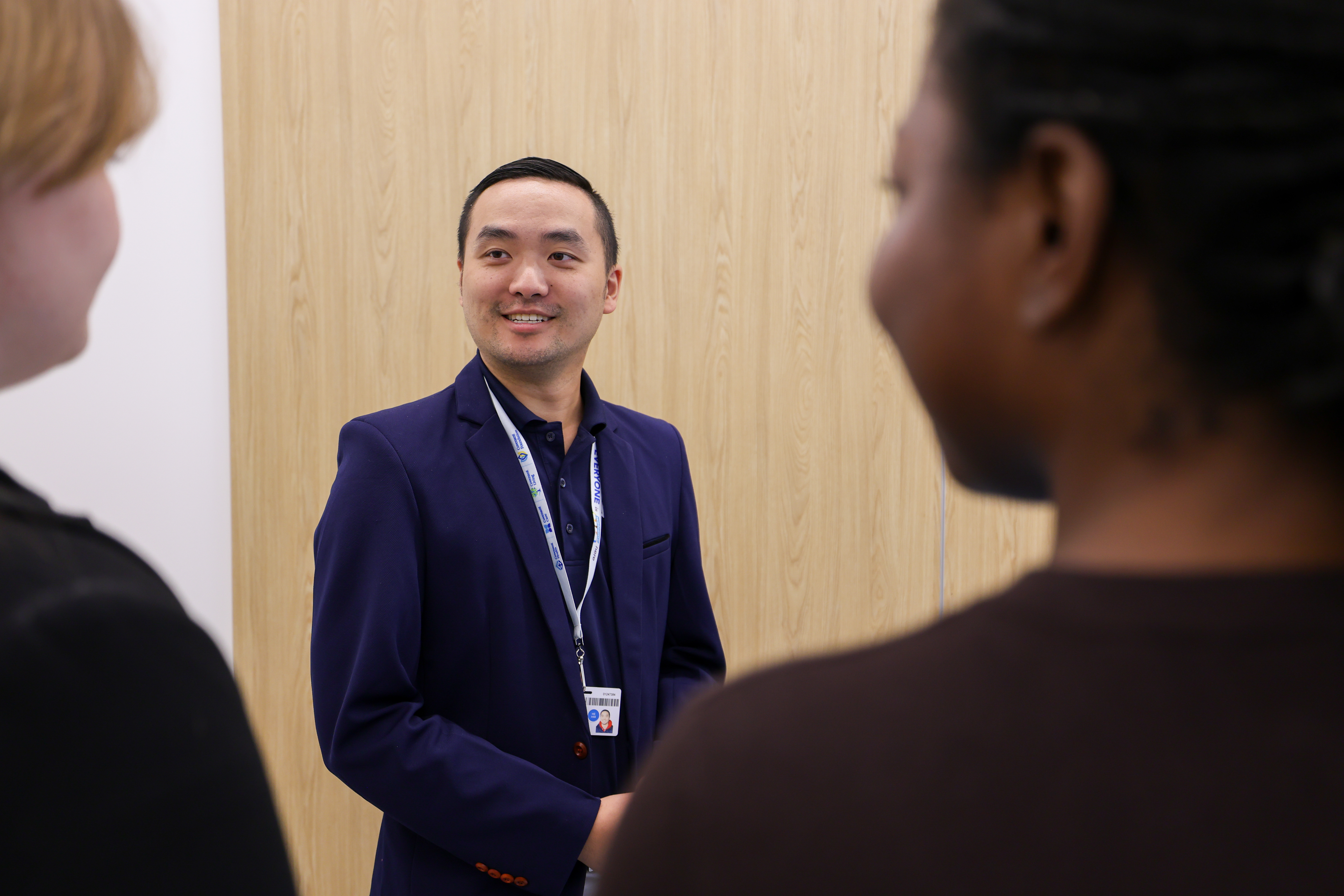
For Brandon Wong, talent acquisition advisor with Covenant Health, the program represents a meaningful shift in how the organization recruits and retains nursing talent, particularly in rural communities.
"We've heard from new grads for years that they want to take on roles in places like Bonnyville or specialty areas like the emergency room, but they're scared to make that leap without support," says Brandon. “The GNTPP gives them a real runway to build confidence in those settings. We're not just filling shifts; we're investing in nurses who will stay and grow with us.”
A culture shift on the unit
Samantha has noticed that the program is causing ripple effects extending beyond Aksa. Other staff, even nurses who have been working for a year or two, are now joining in to review skills and procedures they didn't get to experience during their own orientation.
"I think there has been a culture shift," Samantha says. “I hope we move away from the traditional nurses eating their young or the sink or swim approach. I think more nurses would be willing to try higher acuity or more specialty units like the emergency room, rural, intensive care unit or labour and delivery if they knew they had this kind of support.”
Becoming the nurse she wanted to be
For Aksa, the program has changed how she sees herself. She describes herself as someone whose internal dialogue often defaults to self-doubt, but the constant feedback from Samantha and her other clinical guide, Tanya Krywiak, has rewired that voice.
"I needed someone to tell me I was doing it right," she says. “It was good to hear someone encouraging me and telling me I was on the right path.”
A year from now, Aksa hopes to still be in the Bonnyville emergency room, working as the confident nurse she has always wanted to become. She's already seeing it happen.
"When you see a patient come back to life, when you see the relief on a family's face, you truly see the change you made," she says. “Nursing is so much more than just a job.”